
Brazil records a historic milestone of R$ 47.9 billion in forestry production in 2025, driven by the expansion of silviculture and strong demand for clean energy and pulp.
The Brazilian forestry sector reached an unprecedented level in 2025, moving R$ 47.9 billion, according to official PEVS data released by IBGE. This expressive result crowns the continuous advance of cultivated trees in the country, which play an increasingly central role in the sustainable energy matrix and the base industry.
The 6.7% growth compared to the previous cycle highlights the strength of the national green economy. While extraction in native forests showed a contraction, commercial cultivation areas gained expressive ground, consolidating Brazil as a global benchmark in high-productivity forest management.
The Strength of Silviculture and the Energy Transition
Planted forests were the main engine of this economic performance, accounting for a significant 85.6% of all revenue generated by the sector. Silviculture reached the mark of R$ 41 billion, recording an 8.6% increase, while plant extraction dropped to R$ 6.9 billion.
This movement reinforces the definitive migration to industrial and renewable production models, essential for the manufacture of biofuels, sustainable charcoal, and pulp. In total, the activity is present in nearly 4,900 Brazilian municipalities, covering an area exceeding 10 million hectares dedicated to ecological management.
The consolidation of planted forests demonstrates that the Brazilian bioeconomy is advancing on solid foundations, uniting industrial competitiveness and long-term environmental responsibility.
Territorial Leadership and Featured Products
The state of Minas Gerais maintained its isolated leadership on the national scene, concentrating R$ 9.2 billion in silviculture and housing 2.3 million hectares of cultivated green areas. The territory of Minas Gerais also stands out in the production of charcoal, a fundamental input for green steelmaking.
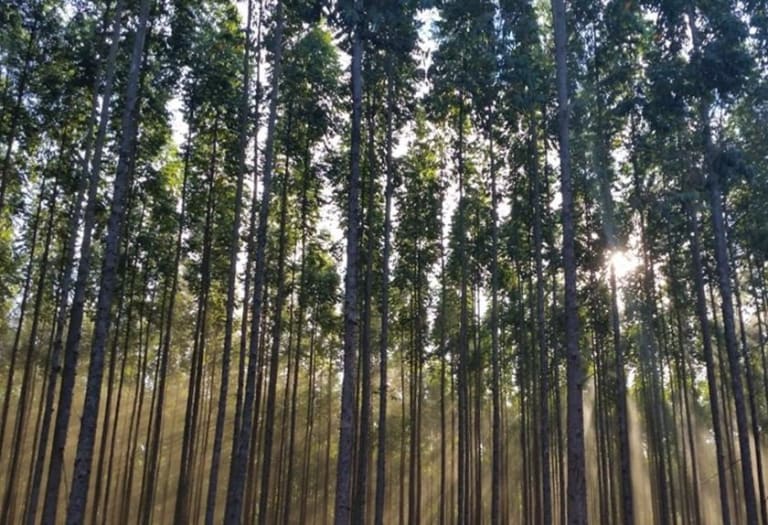
Among the marketed products, log wood intended for the manufacturing of paper and pulp led revenues, reaching R$ 17.6 billion. Eucalyptus and pine remain sovereign in the productive landscape, occupying more than 96% of the entire extent of the country’s commercial forests.
Given this expansion scenario, the Brazilian forestry sector projects new records for the coming years, driven by global demands for energy transition and industrial decarbonization. The ability to unite the supply of renewable energy with the preservation of native biomes positions the country at the forefront of global sustainable development.