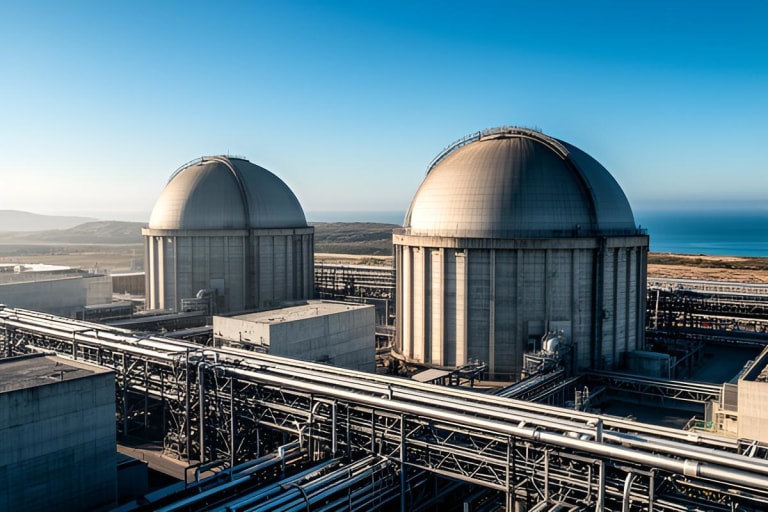
The Angra 1 nuclear power plant has begun a scheduled 90-day shutdown, focusing on maintenance, inspections, and its operational life extension, marking an intense period for energy generation.
The Angra 1 nuclear power plant, a fundamental component of Brazil’s energy matrix, has commenced a crucial maintenance period.
At midnight last Saturday, September 19, the unit entered a scheduled shutdown estimated to last three months.
This period will be dedicated to a series of essential interventions, ranging from routine maintenance and detailed inspections to design modifications and advancements in the plant’s life extension program, known as Long Term Operation (LTO).
The initiative reflects a commitment to long-term safety and energy efficiency.
Preparation for this complex process began months ago, involving intricate logistics that encompassed the reception of new nuclear fuel, a wide range of equipment and materials, as well as the assembly of temporary structures.
The mobilization of hundreds of specialized professionals underscores the complexity and importance of the operation, which demands meticulous planning to ensure coordination among various tasks and the availability of resources at each stage.
Fuel Replacement and Critical Inspections
One of the most important procedures during the shutdown is the replacement of the reactor’s 44 fuel elements.
The new fuel, already stored in the New Fuel Pool (PCN), will be loaded for the next operating cycle, while the used elements will be relocated to the Used Fuel Pool (PCU).
This stage is vital for the continuity of energy generation and for the plant’s operational safety.
The removal of fuel also allows access to the reactor’s interior for crucial inspections and interventions.
Among these, particular emphasis is placed on the evaluation of the vessel’s lower internal structures through visual examinations and automated ultrasound.
The schedule also includes the Upflow Conversion modification, which alters the coolant flow in a section of the vessel’s internal components, optimizing reactor performance.
Extensive Maintenance and Modernization
Eletronuclear, responsible for the operation of Angra 1, announced that the shutdown will encompass the ten-year In-Service Inspection (ISI).
This procedure periodically assesses components such as reactor vessel welds, primary circuit piping, and internal structures.
Additionally, the Integrated Leak Rate Test (ILRT) will be performed to verify the sealing of the reactor containment structure, ensuring its integrity in extreme situations.
Eletronuclear stated:
The scheduled shutdown is an essential action to ensure that the plant continues to operate safely and efficiently, incorporating technologies and procedures that extend its operational life and reinforce our capacity for clean energy generation.
Maintenance covers various equipment and systems, such as the overhaul of the main electrical generator, the maintenance of the 500 kV and 138 kV transformers, and the inspection and replacement of reactor cooling pump seals.
Motorized and pneumatic valves will also be overhauled, ensuring the full functioning of the entire complex.
Investment in Safety and Innovation
Twelve design modifications are planned, eight of which are in safety-related systems.
These interventions include the replacement of the containment recirculation system motors, the replacement of motorized valve actuators, and the implementation of the filtered containment venting system.
Components related to the Environmental Qualification Program for Electrical and Instrumentation Components (PQAEE) will also be replaced, reinforcing compliance with rigorous environmental and safety standards.
The scheduled shutdown of Angra 1 is a strategic investment in Brazil‘s nuclear energy infrastructure.
At the end of the 90 days, the plant is expected to return to operation with optimized capacity, ensuring safety and reliability in clean energy generation.
This cycle of maintenance and modernization is fundamental for the extension of the plant’s operational life and for the continuous contribution of nuclear energy to the national energy matrix, aligning with the objectives of a more sustainable and resilient future.