6th-grade students at Colégio Visconde de Porto Seguro have transformed the study of minerals into an innovative digital game. The project, “Super Trunfo – Mineral Tech,” which combines Science and programming, won first place in a prestigious national Education and Science award.
What do minerals like lithium, copper, and silicon have to do with cell phones, computers, and other everyday electronic devices? This intriguing question served as a catalyst for 6th-grade students at Colégio Visconde de Porto Seguro to transform Science content into an engaging digital game. The project, named Super Trunfo – Mineral Tech, demonstrated the successful fusion of research, programming, and an awareness of sustainability.
The relevance of the work was nationally recognized with the achievement of 1st place in the Seymour Papert-Paulo Freire Award for Education and Science 2026, in the Private School Teacher category. This accomplishment highlights the potential of innovative education in addressing crucial topics, such as the origin of natural resources and technology in our daily lives, preparing a new generation with critical thinking and creative solutions.
An Interdisciplinary and Sustainable Approach
The Super Trunfo – Mineral Tech initiative originated from a keen interdisciplinary project, connecting Science classes with Digital Literacy. In Science, students embarked on in-depth research into the minerals essential for manufacturing electronic equipment, analyzing their properties such as hardness, various technological applications, geographical distribution, and economic value. This deep dive into the universe of minerals revealed the complexity and importance of these resources.
Furthermore, the project expanded the discussion to the environmental impacts of mining, a crucial topic for the clean energy sector and sustainable development. Students reflected on the intrinsic relationship between nature and technology, even questioning how the advancement of new technologies, such as artificial intelligence, could intensify the demand for mineral resources, requiring close attention to sustainability.
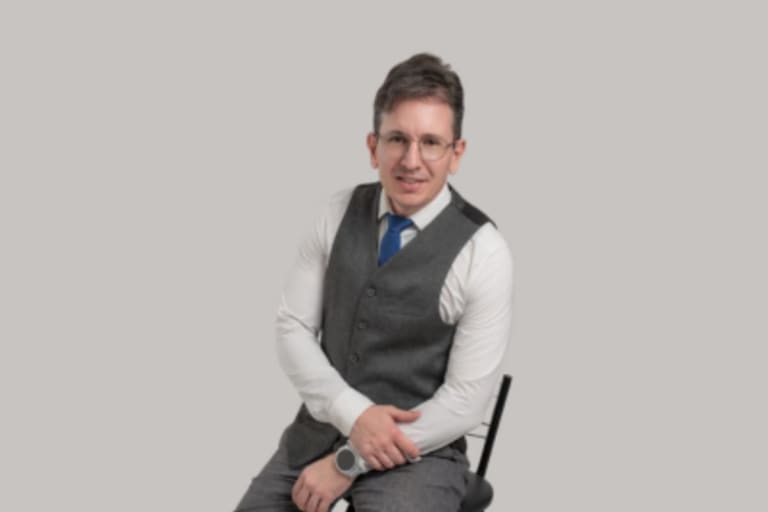
“More than just learning to program, the goal was for students to perceive technology as a tool to transform the knowledge they were building in Science. They needed to research, select information, make decisions, and think about how to translate all of this into game logic. In this process, programming ceases to be an end in itself and becomes part of solving a concrete challenge.”
States Guilherme Manarin, Digital Literacy teacher at Colégio Visconde de Porto Seguro, emphasizing the value of active and project-based learning.
From Knowledge to Programming: The Game’s Creation
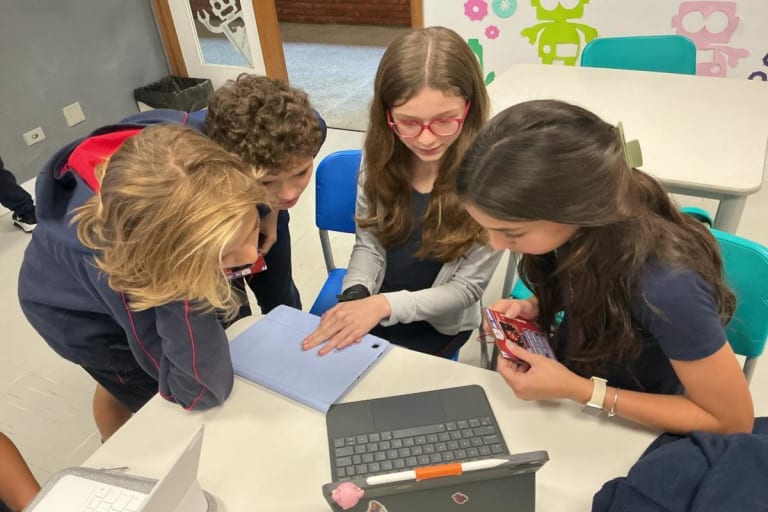
The theoretical research came to life with practical application in Digital Literacy classes. The young students used Micro:bit and the MakeCode platform to transform the collected data into a digital Super Trunfo. During the programming phase, fundamental concepts such as variables, random numbers, and conditional structures were explored, which are essential elements for the game’s functionality.
The game mechanics are simple and engaging: by shaking the device, one of the seven researched minerals is drawn for each player. Each participant chooses one of four attributes for the duel – Mohs hardness, functions in technology, economic value, or geographical distribution. The winner of each round earns a point, and the game is won by whoever first reaches five points, stimulating strategy and knowledge about minerals.
The project development went beyond programming, involving creation and experimentation stages. Students actively participated in the game’s conception, and the school community also got involved: some families contributed with 3D printing of pieces, strengthening the connection between classroom learning and the home environment, and educational innovation.
Impact and Recognition of Pedagogical Innovation
For Anna Carolina Salvador, Science teacher at Colégio Visconde de Porto Seguro, interdisciplinarity was fundamental in bringing scientific concepts closer to students’ daily lives.
“When they understand that the minerals they study are in cell phones, computers, and so many other devices they use every day, the content takes on a different meaning. From there, we were able to broaden the discussion to the origin of these resources, the impacts of mining, and the disposal of electronic waste. The game was a way to connect this knowledge and put students in an active position during learning.”
Explains Anna Carolina, emphasizing the importance of sustainable education.
“Before the project, I didn’t imagine how many different minerals exist inside the devices we use every day. It was really cool to research them and then use that information to create and program our own game. We were testing, correcting, and learning throughout the process.”
Shares Luiza Moreira da Rocha Oliveira, a 6th-grade student, illustrating the transformative impact of project-based learning and technology as an educational tool.
The nationally scoped Seymour Papert-Paulo Freire Award for Education and Science recognizes innovative pedagogical practices developed by educators. The award values projects that promote new teaching and learning approaches in the fields of technology, scientific experiments, and humanities, with a focus on positive impact and achieved results.
In 2026, winning 1st place in the Private School Teacher category for Super Trunfo – Mineral Tech positioned Colégio Visconde de Porto Seguro among the nationally prominent institutions in education and innovation.
This is not the first time Professor Guilherme Manarin has received such an honor. In 2023, he had already won 1st place in the same award, reinforcing Colégio Visconde de Porto Seguro‘s commitment to projects that integrate technology and pedagogical practices, driving education into the future.
The Future of Education and Sustainability
The victory of Super Trunfo – Mineral Tech at the Seymour Papert-Paulo Freire Award is not just a recognition of excellence; it represents a beacon for the future of education, especially in critical areas such as clean energy and sustainability. Projects like this demonstrate the power to engage young students in complex topics, transforming learning into an interactive and relevant experience.
By integrating Science, programming, and a deep reflection on the impacts of mining, Colégio Visconde de Porto Seguro is shaping not only students but also conscious citizens capable of innovating.
The ability to transform knowledge into practical solutions and critical thinking about the use of mineral resources are crucial competencies for future generations, who will face the challenge of building a more sustainable and technologically advanced future.
This educational model, which values curiosity, research, and practical application, is a significant step towards a clean energy sector and a more conscious and balanced society.