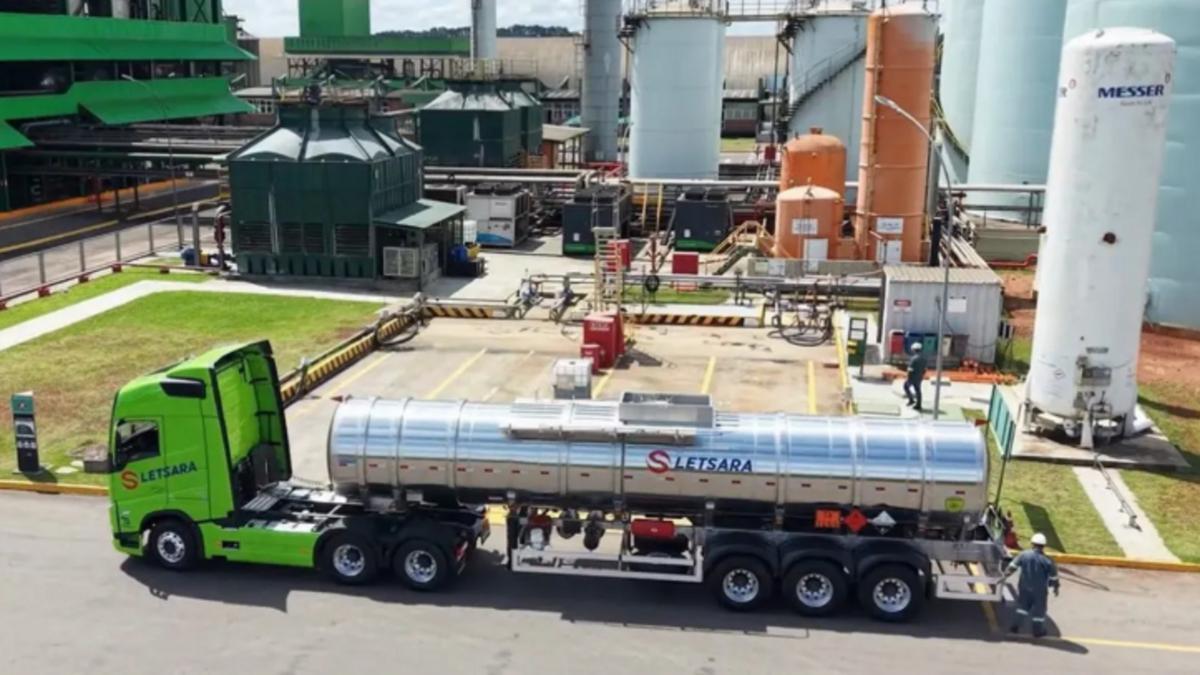
Heavy-duty Volvo trucks run an international route between Argentina and Brazil powered by pure biofuel, achieving drastic reductions in air pollution.
A new era for heavy cargo transport is taking shape on the roads of South America. Volvo units crossed the international border operating exclusively on an advanced biofuel.
The logistics‑environmental initiative links factories in Argentine territory to the Brazilian market. The project tests the efficiency of heavy fleets running on fully sustainable inputs.
Sustainable international route
The cross‑border operation is carried out by the carrier Letsara. The vehicles travel between the province of Santa Fe in Argentina and the state of Rio Grande do Sul in Brazil.
The cargo transported is sodium methylate. The chemical product serves as an essential catalyst in the manufacture of biodiesel sold in the southern region.
Technology without mechanical modifications
The fleet used consists of Volvo FH B100 Flex 2026 mechanical horses. The engines were designed to accept pure biofuel without any need for mechanical adaptation.
This direct compatibility marks an important technological milestone for the international heavy‑haul road transport sector.
The initiative aims to reduce the fleet’s environmental impact without compromising safety and transport quality, guiding the next steps of sustainable expansion.
Advanced safety and monitoring
The mechanical horses are equipped with road‑safety technology. Monitoring cameras and fatigue‑control systems track drivers’ journeys.
The company responsible for the operation has its own fueling infrastructure at its headquarters in Rio Grande do Sul, ensuring adequate logistical support for the new fuel.
Significant reduction of pollutants
The biofuel used, named Be8 BeVant, delivers efficiency equivalent to that of traditional mineral diesel. The major difference lies in the reduced ecological footprint.
Studies based on the international greenhouse‑gas protocol show a significant drop in pollutant emissions into the atmosphere during road use.
Environmental and Operational Indicators
The ecological gains include a drastic reduction in particulate matter and black smoke emissions. Roadway air quality is directly improved by the project.
The project management collects continuous data on average consumption, mileage traveled, maintenance costs, and the volume of fossil fuel displaced during trips.
Strategic Partnership in the Production Chain
The multinational Evonik serves as the supplier of the raw material transported from Argentine soil. Circular logistics consolidate a lower-impact production and distribution model.
The southern carrier has decades of market experience and moves hundreds of thousands of tons annually across several South American countries.
Success in this pilot phase could pave the way for the definitive expansion of clean energy matrices in heavy international transport.