The National Monetary Council lowered the Climate Fund interest rate for battery projects, encouraging domestic production and the sector’s technological capacity.
The clean‑energy investment landscape in Brazil has just received a significant boost. The National Monetary Council (CMN), in a strategic decision made last Thursday, enacted a substantial reduction in interest rates for projects involving batteries manufactured within the country.
This measure, formalized by CMN Resolution No. 5,353, aims to allocate Climate Fund resources at a considerably lower financial cost. The interest rate fell from 6.5% to 3% per year, a cut that promises to attract investment and stimulate the development of energy‑storage technologies.
Incentivizing Domestic Battery Production
To benefit from this reduced rate, projects must meet a series of criteria set by the National Bank for Economic and Social Development (BNDES), which oversees the operation of the Climate Fund.
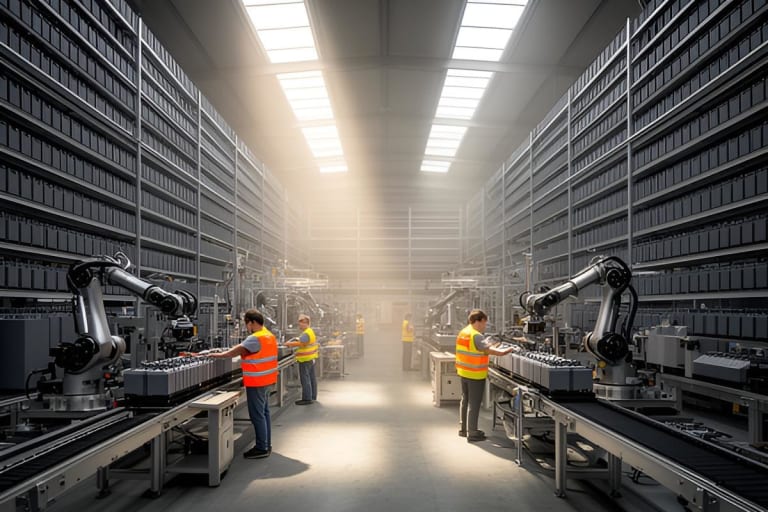
These requirements focus on proving installed industrial capacity in Brazil. Manufacturers must demonstrate that they have robust local production infrastructure.
Additionally, projects must meet minimum national content percentages. This means using components, processes, and inputs produced domestically.
Detailed documentation on all elements involved in battery manufacturing will be crucial. This transparency is essential to ensure compliance with the established guidelines.
The clear intent behind this policy is to strengthen the battery supply chain in the country. By encouraging local manufacturing, the goal is to reduce import dependence and, consequently, increase sector competitiveness.
The BNDES president, Aloizio Mercadante, emphasized:
“Reducing the Climate Fund’s financial cost will stimulate the attraction of new manufacturers and increase the country’s productive and technological capacity.”
Mercadante also linked this measure to the energy sector’s planning. He mentioned the Capacity Reserve Auction (LRCAP), scheduled for December 2026, as an event that will benefit from this new financing policy.
Impact on Projects and the Market
The BNDES expects that this interest rate reduction will attract a larger number of manufacturers interested in establishing or expanding their operations in Brazil.
In turn, this should boost the productive capacity of the battery sector. Technological improvement is also an anticipated outcome of this policy.
For projects selected in future auctions that require domestic content, financing could cover up to 80% of the total investment.
Amortization schedules will be flexible and will be adjusted according to each project’s cash flow.
The first auction, scheduled for December 2, will already include this domestic content requirement. A second auction will take place on December 4, with no restrictions on equipment origin.
Climate Fund: Pillar of Sustainability
The Climate Fund is a key instrument within the National Climate Change Policy. Linked to the Ministry of the Environment (MMA), its management is carried out by the BNDES.
It is an accounting-type fund. Its primary purpose is to secure financial resources to support projects and studies.
The main goal is to finance ventures that aim to mitigate the effects of climate change. Incentivizing energy storage technologies aligns perfectly with this mission.
The CMN decision marks a milestone for Brazil’s energy transition. By lowering the cost of financing for battery projects with domestic components, the government signals a firm commitment to innovation and sustainability.