Aneel authorizes new renewable energy projects in Rio Grande do Norte, Goiás, and Espírito Santo, driving investments of over R$ 1 billion and setting sector charges.
The Brazilian energy transition gains new momentum with recent decisions by Aneel (National Electricity Agency). The regulator has cleared commercial and testing operations for new wind, solar, and hydro projects across various regions of the country.
The authorizations benefit projects located in the states of Goiás, Espírito Santo, and Rio Grande do Norte. Key highlights include Spic‘s wind complexes totaling R$ 755 million and the hydroelectric plant of Atiaia Renováveis, valued at R$ 350 million.
The agency’s decisions reinforce the expansion of clean energy mixes in both the free market and regulated environments. Additionally, the package of measures established crucial financial guidelines for covering operational charges of the national energy infrastructure.
Wind Progress in the Northeast and Solar in the Southeast
In Brazil’s Northeast, Spic received the green light to operate generating units at the Paraíso Farol II and Paraíso Farol III wind farms. The projects are located in the municipality of Touros (RN) and include seven turbines activated in this phase.
Overall, the wind structure designed by the company covers the Paraíso Farol and Pedra de Amolar complexes. The portfolio will comprise 17 wind turbines with a total installed capacity of 105.4 MW, focused on serving the free energy market.
Electricity generated in the interior of Rio Grande do Norte will be fed into the SIN (National Interconnected System) via the João Câmara II substation. With commercial operation slated for 2026, the produced volume equals the annual consumption of 280,000 households.
In the Southeast, Fortlev secured approval for two photovoltaic generating units at the Fortlev Sede I plant. Located in the city of Serra (ES), the project adds 0.22 MW of solar capacity to the Espírito Santo energy infrastructure.
Hydroelectric Expansion in the Midwest and Charge Regulation
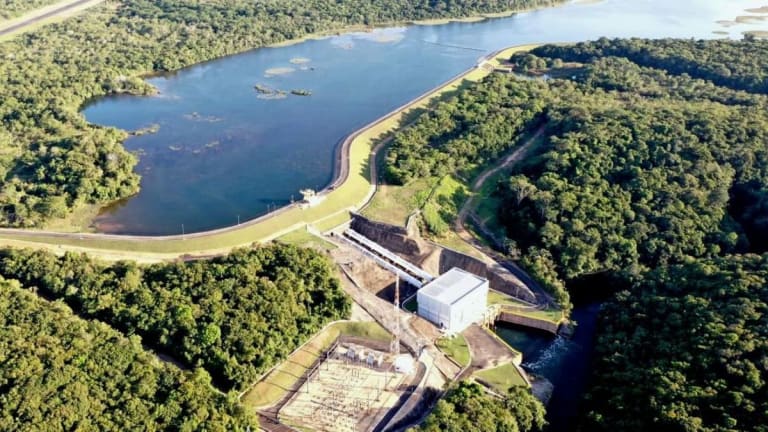
The Midwest also records significant progress with the approval granted to Atiaia Renováveis. The company received authorization to begin testing the first generating unit of the PCH Taboca, located in Jataí (GO), with a capacity of 14.9 MW.
The implementation of the Small Hydroelectric Plant marks the company’s debut in the state of Goiás. The project requires financial contributions of R$ 350 million and will reach a total capacity of 29.8 MW upon completion.
The energy from PCH Taboca was negotiated in the 2022 A‑5 auction, ensuring supply to regulated market distributors starting in January 2027. The project will connect to the main grid via the Barra dos Coqueiros substation.
Alongside plant approvals, Aneel set deadlines for the collection of mandatory sector charges. Transmission companies must settle the quotas related to Proinfa and CDE by the deadline of December 10, 2026.
For Proinfa (Program for Incentivizing Alternative Electric Energy Sources), the amount for January 2027 was set at R$ 25.12 million. The obligations for CDE (Energy Development Account) total R$ 122.40 million.
The collection of the CDE involves 24 transmission concessions connected to the Basic Network. Cemig accounts for the largest individual amount, set at R$ 20.7 million, followed by Axia Nordeste with R$ 17 million.
The new deliberations consolidate the advancement of new clean energy generation hubs in Brazil. With substantial private investment and delivery planning through 2027, the electric sector reinforces its stability and source diversification.
The coordinated action between private actors and the regulatory body ensures market predictability. The increase in energy supply aims to keep pace with national demand growth while maintaining efficient and responsible tariffing in the coming years.