
Redata Regulation Expected in November, Focused on Energy and Sustainability.
The regulation of the Special Taxation Regime for Data Center Services (Redata) is set to be announced by the federal government during the week of November 16. The decision awaits a final discussion with President Luiz Inácio Lula da Silva after his participation in COP31 in Turkey.
House Civil Minister Miriam Belchior said that the drafting of the rules is in its final stage, but the meeting with the president had to be rescheduled due to other priorities on the presidential agenda.
There is considerable anticipation surrounding the publication of this decree. Key issues such as the classification of natural gas and nuclear energy in the supply for the beneficiaries’ facilities still spark debate and await resolution.
The regulation aims to boost the data center sector in Brazil, attracting investment and fostering technological development.
Self-Production of Energy in Focus
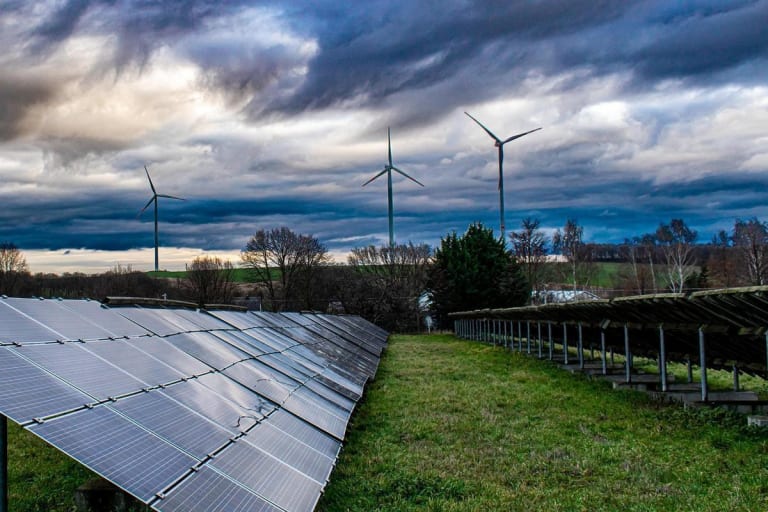
During a meeting of the National Energy Policy Council (CNPE), President Lula emphasized the importance of data centers prioritizing self-production of energy.
The idea is for these facilities to invest in generating the electricity needed to meet their own demand, without overloading the public distribution grid.
This stance was seen by the market as an incentive to additivity, a concept that has sparked discussions, especially in the gas sector.
The gas segment argues that building new renewable sources to serve data centers could, paradoxically, increase the need to contract gas-fired thermal plants to maintain the balance of the electric system.
The discussion highlights a dilemma between energy sustainability and supply security.
What is Redata?
Redata was established by Law No. 15,504, signed in September 2026, with the goal of providing tax incentives for the installation, expansion, and modernization of data processing centers in the country.
This regime covers essential services such as data storage, cloud computing, and artificial intelligence.
The legislation provides for the suspension of federal taxes, such as PIS/Cofins, IPI, and Import Duty, on the acquisition of equipment and components intended for approved projects.
For imports, the benefit of the Import Duty is limited to products that have no equivalent domestic production.
In return, the benefiting companies must meet significant requirements. Among them is the allocation of at least 10% of service supply to the Brazilian market, or the undertaking of additional investments in research, development, and innovation (R&D).
Companies must also invest in R&D an amount equal to 2% of the cost of the products acquired with the tax incentives.
In the environmental sphere, Redata requires that all electricity demand of the facilities be met by renewable or low‑emission sources, through supply contracts or self‑generation. It also sets a water‑efficiency limit of 0.05 liters per kWh.
The regulation will detail the conditions for company eligibility, sustainability criteria, and procedures for proving the counter‑measures. Eligibility and co‑eligibility with the regime will be handled by the Federal Revenue Service.
The definition of Redata‘s rules is seen as a key step to cement Brazil as a strategic hub for data centers in Latin America. The sector eagerly awaits the final rules, which promise to attract new investments and boost the country’s digital economy.