
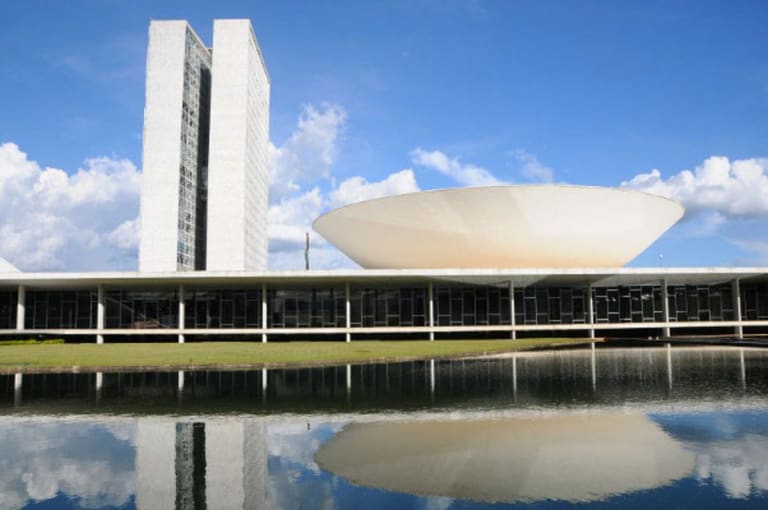
The federal government announced Provisional Measure 1340/26, which provides for a reduction of R$0.64 per liter of diesel to mitigate the impacts of the international oil crisis on the national economy.
In a direct effort to curb inflationary pressure caused by the geopolitical conflict in Iran, the government has issued Provisional Measure 1340/26. The initiative aims to shield the country’s logistical costs from external market volatility and prevent higher freight costs from being passed on to food prices.
The package of measures combines the exemption of federal taxes, such as PIS and Cofins, with an economic subsidy policy. The Treasury team expects this direct intervention to provide immediate relief at the fuel pumps for drivers and freight carriers.
Reduction and Oversight Mechanisms
The total reduction of R$0.64 per liter is composed of two fronts: R$0.32 from the elimination of refinery taxes and another R$0.32 through direct subsidies to producers and importers. However, the government has imposed a strict condition for maintaining the benefit: companies must provide documentary proof that the discount has been fully passed on to the final consumer.
Luiz Inácio Lula da Silva highlighted:
The measures are intended to ensure that this war does not reach the pockets of drivers or truck drivers.
The strategy will be in effect, temporarily, until the end of 2026.
Tax Compensation and Domestic Market
To balance the estimated fiscal impact of R$30 billion, the government has established a new export tax: 12% on crude oil and 50% on exported diesel. The strategy has a dual logic: besides compensating for revenue, it seeks to encourage oil companies to prioritize supplying the domestic market rather than focusing solely on foreign sales during periods of high global prices.
Oversight has also been strengthened. The new regulation increases penalties under the National Fuel Supply Law, establishing heavy fines ranging from R$50,000 to R$500 million for gas stations and distributors that engage in arbitrary price increases or refuse supply.
The next step for Provisional Measure 1340/26 will be a detailed analysis by a joint committee in the National Congress. If approved by the legislature, the measure will consolidate the stabilization policy, bringing greater predictability to the transport and logistics sector amid global uncertainties caused by tensions in the Middle East.
RELATED NEWS
 Petrobras reaches 13.3 billion BRL in fuel subsidies following new transfers
READ MORE
Petrobras reaches 13.3 billion BRL in fuel subsidies following new transfers
READ MORE
 Next Brazilian government will face severe institutional and fiscal crisis alongside international pressure from Trump
READ MORE
Incoming Brazilian government will face a triple challenge amid Supreme Court crisis, economy, and Trump
READ MORE
Next Brazilian government will face severe institutional and fiscal crisis alongside international pressure from Trump
READ MORE
Incoming Brazilian government will face a triple challenge amid Supreme Court crisis, economy, and Trump
READ MORE