Researchers at Unicamp create an innovative cylindrical flow battery, promising to revolutionize energy storage for renewables with greater safety and efficiency.
The global energy transition receives a significant boost with a new technology developed in Brazil. Scientists at Unicamp have designed an unprecedented flow battery architecture aimed at optimizing the retention of electricity generated by intermittent sources, such as solar energy and wind energy. The breakthrough promises to overcome historical bottlenecks of conventional systems, making the process safer, more economical, and simplified.
Designed primarily for large power plants and large-scale stationary systems—often coupled with solar and wind farms—the new development addresses the challenge of storing surplus production for later supply to the power grid. The innovation crowns a multidisciplinary effort conducted at FEEC (School of Electrical and Computer Engineering).
Engineering innovation and leak elimination
The project was born out of necessity. During his doctoral studies, engineer João Pedro Aguiar dos Santos noted the absence of suitable commercial components for the study he intended to conduct. Under the supervision of professors Cesar Pagan and Hudson Zanin, the team had to design the entire experimental structure from scratch, integrating knowledge from mechanics, electronics, and electrochemistry.
The researcher stated:
It was a multidisciplinary system, uniting mechanical, electronic, and electrochemical engineering, and we had to build everything from scratch
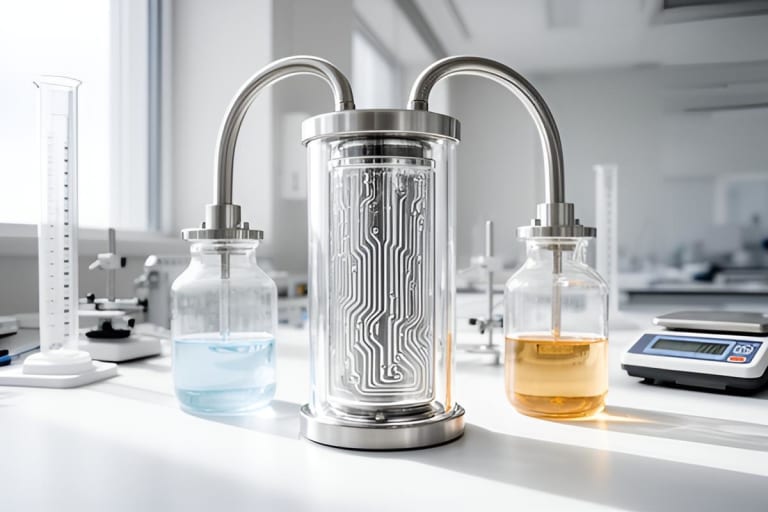
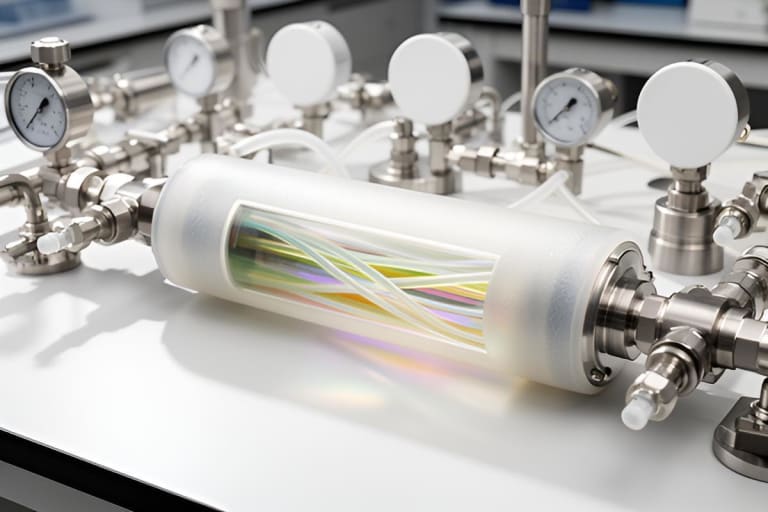
While traditional flow battery models rely on stacked plates and a complex network of external pumps and hoses to move the electrolyte, the new design eliminates these critical points of failure. The Brazilian technology relies on two concentric annular electrodes, independently sealed. The movement of the liquid occurs via an internal turbine, drastically mitigating the risks of leaks and the need for complex maintenance.
Robust performance and sustainable materials
In laboratory tests, the new flow battery demonstrated excellent operational performance. The device completed 400 consecutive charge and discharge cycles without the need for chemical additives in the electrolyte. Charge efficiency reached an impressive 98%, with an energy efficiency rate close to 82%. For practical testing, the prototype was able to keep LED lamps and a fan running for two uninterrupted hours.
The project also stands out for its use of accessible, domestically sourced inputs, such as graphite and standardized mechanical parts. The aqueous electrolytes are non-flammable, using diluted lead to take advantage of the country’s existing recycling chain. In addition, replacing traditional sulfuric acid with methanesulfonic acid ensures a biodegradable, less toxic, and significantly less corrosive solution.
Future prospects for the clean energy sector
Although the equipment is not suitable for electric urban mobility—such as cars and buses—it emerges as a clean and viable alternative to replace polluting diesel generators in various industrial and backup applications. A patent application has already been filed with INPI (National Institute of Industrial Property) with the support of Inova Unicamp.
The next step toward the commercial consolidation of the technology involves the transfer of knowledge through partnerships and licensing with private sector companies. By bridging academia and the market, Brazil strengthens its role at the forefront of technologies geared toward sustainability and the stability of clean energy grids.