Government implements innovative tool to integrate sustainability into public works.
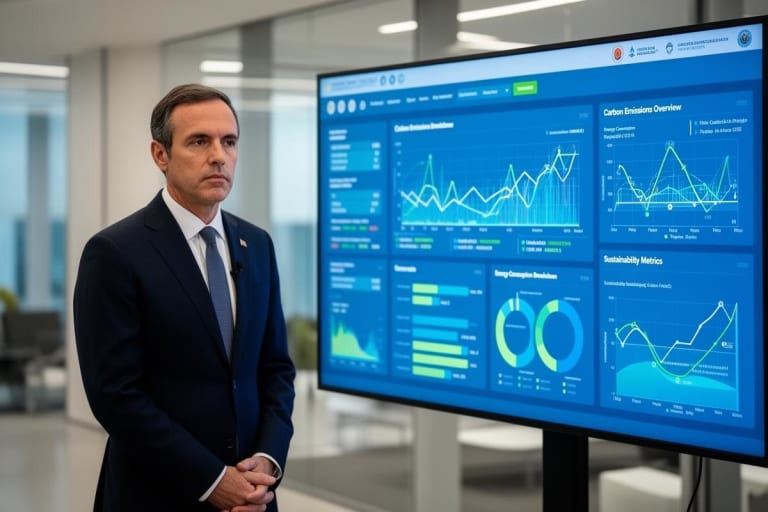
The federal government is moving forward with the development of a new digital tool aimed at revolutionizing the public works contracting process. With the goal of promoting sustainability and reducing environmental impact, a carbon calculator is being created to assess emissions associated with the production and transport of essential materials like steel and cement.
This strategic initiative leverages the state’s purchasing power as a driver to encourage the adoption of inputs with a lower ecological footprint. The intention is for public tenders to consider not only financial cost but also the environmental responsibility of proposals, thereby incentivizing the selection of greener practices in civil construction.
Focus on High-Impact Materials
The new carbon calculator will focus on high-volume and high-impact construction materials, such as steel and cement, which are responsible for a significant portion of Brazil’s industrial emissions. The goal is for the tool to be operational as a prototype by March 2027, with the consolidation of new public procurement rules expected in the first half of the same year.
The project is a collaboration between the Ministry of Development, Industry, Trade, and Services (Mdic) and the Ministry of Management and Innovation in Public Services (MGI). Partnerships with Caixa Econômica Federal, the National Department of Transport Infrastructure (Dnit), and the technology company Serpro are crucial for the development and integration of the tool into existing government systems.
Traceability and Environmental Impact
The calculator will cross-reference budgetary data, such as material quantities, types of machinery, services employed, and transport distances, with specific emission factors. The objective is to map the complete life cycle of inputs, from raw material extraction to their incorporation into the work, providing a clear metric of carbon emissions.
To achieve this, the tool will be integrated into crucial systems like Sinapi (National System of Construction Costs and Indices Research) and Sicro (System of Reference Costs for Works), allowing for comprehensive and detailed analysis. The initiative also foresees the creation of green labels for steel and cement, certifying products with lower environmental impact.
Next Steps and International Collaboration
The project, currently in its initial phase, also has the support of the German international cooperation agency GIZ, which focuses on the decarbonization of the steel and cement industries. While details regarding the mandatory use of the calculator and the exact classification criteria are still being defined, the timeline indicates the consolidation of guidelines and the presentation of tender models and contractual clauses by May 2027.
This measure aligns with the National Public Procurement Strategy for Sustainable Development and represents a significant advance in incorporating environmental criteria into government purchases, strengthening Brazil’s commitment to the green economy and the reduction of greenhouse gas emissions.