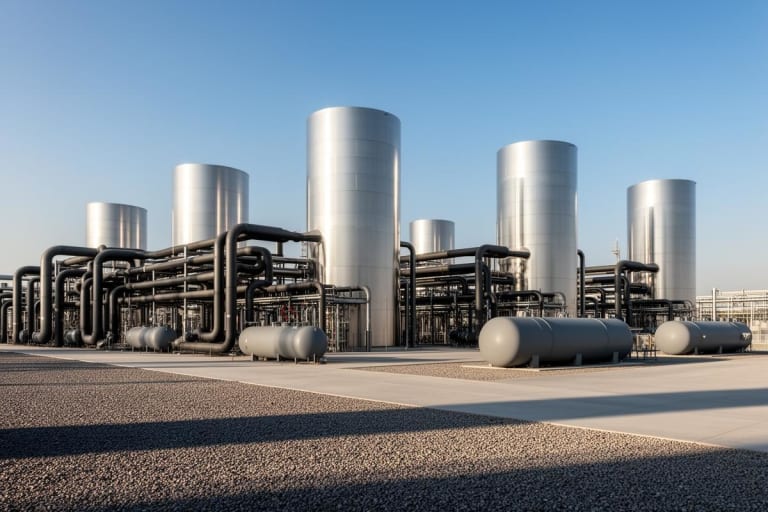
The Ministry of Mines and Energy (MME) has officially greenlighted 32 new natural gas thermal power plant projects, totaling nearly 4 GW of capacity, thereby strengthening the national electricity system’s security.
The federal government has advanced in structuring the electricity matrix by issuing, between September 21 and 22, the concession ordinances for 32 natural gas thermal power plants. These projects were made viable during the Capacity Reserve Auction (LRCap) held in March 2026 and will now officially operate under the Independent Power Production (IPP) regime.
With an installed capacity totaling approximately 3,987 MW, these plants will play a strategic role: ensuring the energy supply to the National Interconnected System (SIN) whenever there is demand from the National Electric System Operator (ONS). To enable these investments, the MME granted the projects eligibility for Reidi, a regime that offers tax benefits on PIS/Pasep and Cofins for the infrastructure sector.
Distribution of Projects Across the Country
The new units are spread across various regions, with a significant concentration of authorizations in the state of Alagoas, including projects by Origem Energia in the municipality of Pilar. In the Northeast, Eneva also stands out with the expansion of its portfolio in Sergipe — with the Porto de Sergipe complex — and in Ceará.
Other states, such as Bahia, Rio de Janeiro, Pernambuco, Paraíba, Mato Grosso do Sul, and Espírito Santo, also house thermal plants authorized under this new round. Among the various operators and consortia are names like J&F, Epasa, Delta Energia, and the consortium formed by the Urca Energia group and BYK Participações.
“The advancement of these concessions reflects the commitment to Brazil’s energy resilience, ensuring that the power market is robust enough for the supply challenges anticipated by the end of this decade.”
Timeline and Next Steps
The implementation timeline is rigorous, and developers must meet specific deadlines for the units to begin commercial operation. The timeframe defined by the MME extends until 2029, with the largest portion of the generation park expected to become operational by October 2028.
In addition to construction, the ministry imposed clear conditions in the ordinances, requiring formal proof of fuel supply contracts and the maintenance of performance guarantees stipulated in the auction’s public notice. With this move, the country strengthens its thermal power base, which is essential to mitigate the intermittency of renewable sources and maintain the balance of the electrical system.