
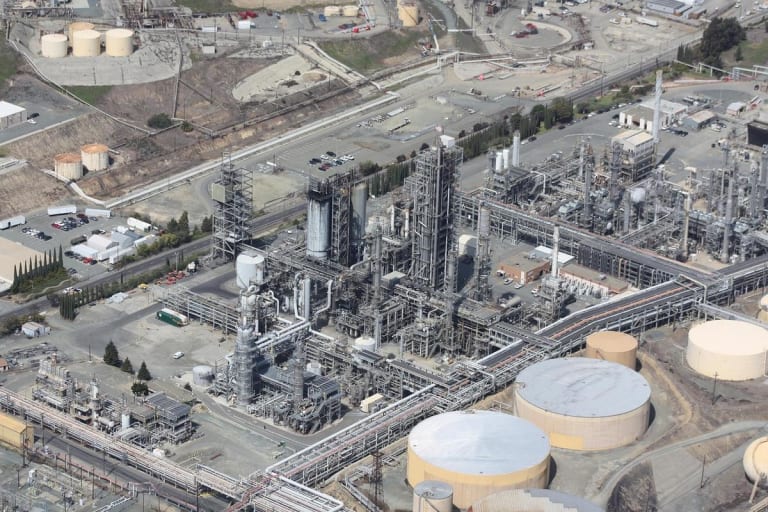
The energy market is experiencing a clash over the costs of transporting natural gas from Brazil’s pre-salt fields, with tariffs at the center of debate and disagreements over the degree of regulatory intervention in the sector.
The tariffs charged for the use of the Integrated Transportation System (SIE) pipelines, a strategic infrastructure for national production in the pre-salt region, have become the focal point of a heated dispute.
Estimates from the consulting firm Wood Mackenzie indicate that the breakeven point for these operations ranges between US$ 4 and US$ 6 per million BTU.
This level is considered high and puts pressure on the competitiveness goals advocated by the Ministry of Mines and Energy (MME).
However, the divergence in figures is just one facet of the problem. While the government seeks “fair remuneration” to enable the growth of the natural gas market, operators and asset owners question the calculation methodologies and the legal certainty of the proposals.
Lack of transparency in the formation of these tariffs is identified by experts as the main barrier to equitable access to the infrastructure.
Disagreements Over ANP’s Role
The draft resolution from the National Agency of Petroleum, Natural Gas and Biofuels (ANP), which aims to regulate non-discriminatory access to transportation and processing facilities, has caused a clear division among industry players.
On one side, companies such as Petrobras, Shell, Petrogal, and Repsol Sinopec warn of what they describe as an “interventionist bias” by the regulatory body.
From the perspective of the companies that own the assets, the attempt to move the negotiated access regime — provided for in the Gas Law — closer to a purely regulated model could discourage new investments in exploration and production (E&P) projects.
For Galp, for example, transportation costs cannot be viewed in isolation. The company argues that the return on these investments is intrinsically linked to the viability of oil fields and should not be compared to natural monopolies.
The company stated:
The cost and return on investment are embedded within the E&P project itself, and cannot be calculated as an autonomous infrastructure business, nor compared to natural monopoly activities where revenue guarantees and economic-financial rebalancing typical of a regulated regime are present.
Pressure for Transparency
Conversely, companies like CNOOC and J&F advocate for tighter regulation, arguing that current conditions impose excessive barriers for interested third parties.
CNOOC even reports that minority producers have already faced contractual difficulties and argues that unjustified costs in asset construction should not be passed on to users.
The debate takes on technical dimensions regarding which international model to follow. Wood Mackenzie points out that Brazilian regulation is proposing a level of intervention higher than that observed in countries such as Australia, the United Kingdom, and Canada, where negotiated access preserves the freedom of commercial arrangements.
The consultancy’s director, Mauro Chávez, emphasizes that the Norwegian model, often cited as a reference by the ANP, was designed for a historical context and export market distinct from Brazil’s.
The outcome of this discussion will be crucial for the future of the natural gas market in Brazil. The quest for a balance between protecting the investments made by oil companies and the need to open the sector to new competitors remains under analysis.
The sector awaits decisions that could finally unlock supply and reduce costs for the end consumer.
RELATED NEWS
 Legal and Regulatory Transformations Place Legal Certainty at the Heart of the Electric Sector’s Agenda
READ MORE
Legal and Regulatory Transformations Place Legal Certainty at the Heart of the Electric Sector’s Agenda
READ MORE
 Aneel launches regulatory sandbox to bring renewable energy to isolated Amazonian communities
READ MORE
Aneel launches regulatory sandbox to bring renewable energy to isolated Amazonian communities
READ MORE
 Government enacts critical minerals framework to boost industrialization and national sovereignty
READ MORE
Government enacts critical minerals framework to boost industrialization and national sovereignty
READ MORE