
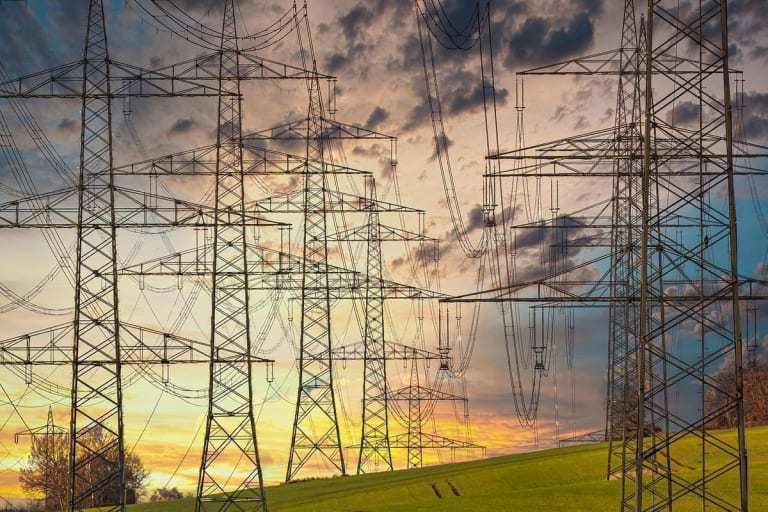
EPE proposes that data centers utilize demand response mechanisms to optimize the national electric system, while the sector debates the role of renewable sources in Redata.
The recent sanction of Redata, the Special Tax Regime for Data Center Services, marks a new chapter for Brazil’s digital infrastructure. With the government seeking to attract investment in data processing, the debate now turns to the operational efficiency and energy sustainability of these high-consumption facilities.
According to Thiago Prado, president of the Energy Research Company (EPE), the integration of these centers into the electrical system requires strategic intelligence. He advocates for including demand response in the regulation, a solution that allows data centers to reduce their load during peak hours, avoiding the need for costly expansions in the transmission grid.
Efficiency in Consumption and Infrastructure
EPE‘s proposal focuses on transforming large consumers into flexible assets. By being compensated to reduce or shift energy use during critical times, these centers ensure system stability without the country needing to prioritize investments in new transmission lines solely to support isolated peaks.
So, demand response is another tool we can put on the table for these data centers to respond without us necessarily having to make an equivalent investment in infrastructure.
While the government is still discussing, via interministerial ordinance, whether natural gas will be classified as a low-emission source within the scope of Redata, the market is closely watching the decarbonization guidelines that will shape tax benefits.
The Strategic Role of Renewables
In parallel, voices from the electricity sector, such as Axia Energia, emphasize the importance of prioritizing clean energy matrices. For the company, the growth of data centers should go hand-in-hand with the energy transition, leveraging Brazil’s competitive potential in solar and wind sources.
Axia‘s vice-president, Juliano Dantas, argues that the country already has technological architectures capable of ensuring the reliability required by data centers using 100% renewable energy. For the executive, Redata is a well-aimed move, but Brazil needs to improve price signals in the electricity sector to consistently attract capital.
The challenge now is to balance attracting new loads, such as the growing demand for data processing, with the security of a system that will require constant expansion. The expectation is that the regulations will soon finalize the guidelines for these ventures to operate efficiently, sustainably, and fully integrated into the SIN (National Interconnected System).