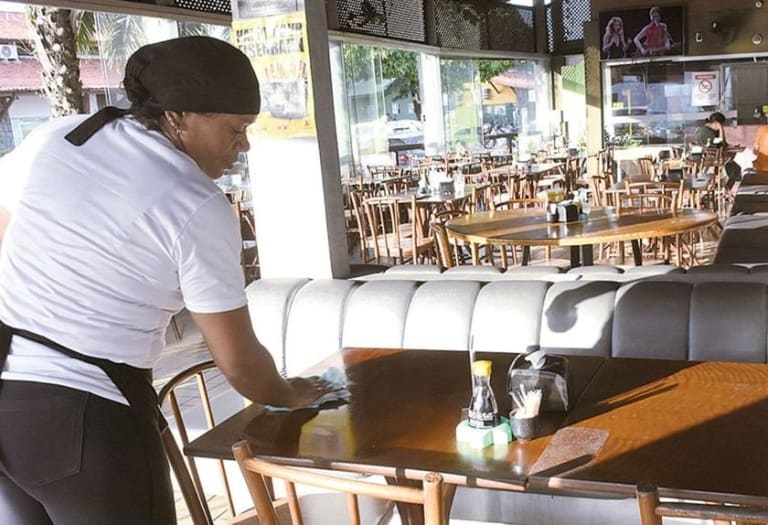
The out-of-home dining sector maintains its upward trend in Brazil, reaching eleven consecutive months of annual growth, despite challenges posed by inflation and credit costs.
Brazil’s bars and restaurants sector ended August on a positive note, consolidating a cycle of eleven months of continuous expansion. According to data from the Índice Abrasel-Stone (Abrasel-Stone Index), sector sales recorded a 7.4% increase compared to the same period last year, reflecting resilient demand driven by a robust job market.
Despite the annual optimism, short-term indicators reveal a slight fluctuation. Comparing August to July, the segment saw a technical contraction of 0.2%, signaling stabilization after months of strong activity. Nevertheless, the widespread nature of this growth is notable, with 23 out of the 24 states monitored by the survey maintaining positive figures.
Regional Dominance and State-Level Landscape
The absolute highlight on the national stage was the Northeast region, which showed the strongest performance among all Brazilian regions, achieving an average growth of 10.3%. Robust local consumption was fueled by significant gains, with Paraíba leading the national ranking with an 18.8% increase, closely followed by Sergipe (16.8%) and Alagoas (12.9%).
Conversely, Tocantins was the only federal unit to register a negative performance, with a 1.6% drop in monthly revenue. This isolated behavior contrasts with the predominantly expansionary scenario that marked the quarter across the country.
Operational Challenges and Tight Margins
Although customer traffic remains high, the sector faces a complex equation. The pressure of inflation on supplies and the increasing cost of credit lines have challenged the financial sustainability of entrepreneurs, who are striving to balance customer attraction with healthy cash flow.
Sector business owners stated:
Business owners in the out-of-home dining sector have absorbed a substantial portion of operational costs to maintain competitive prices and sustain customer flow in their establishments.
Looking ahead, the sector remains cautious. The ability of establishments to manage these tight margins will be crucial for maintaining the resilient annual growth trend, even amidst a macroeconomic environment that demands constant adaptation from business owners.