

The federal government will officially enact Redata and the new Critical Minerals Policy next week, strategic milestones aimed at boosting digital infrastructure and the national energy transition.
The federal government is accelerating its digital and industrial transition agenda with the sanction of two foundational projects for the Brazilian economy. Next Tuesday, September 15th, the Planalto Palace will host the sanction ceremony for Redata (Special Regime for Taxation of Datacenter Services), an initiative coordinated by the Ministry of Finance to establish the country as a technological hub.
The project, which has already passed through the scrutiny of the Chamber of Deputies and the Federal Senate, aims to reduce taxes on the purchase of equipment for data processing centers for a period of five years. With an estimated fiscal impact of R$5.2 billion for 2026, the measure seeks to attract significant investments to the data infrastructure sector.
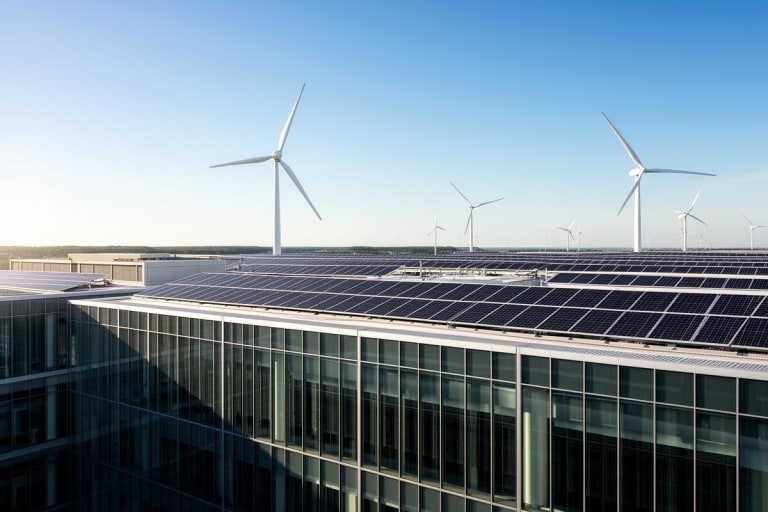
The energy transition in data centers
One of the most debated changes during the progression of Redata in the Senate concerns the energy matrix used by data centers. The original text focused exclusively on renewable sources, but the approved version opened the door for the “low-emission energy” modality.
This flexibility allows the sector to incorporate the use of natural gas and biogas in its operations. Experts suggest that the alteration seeks to balance the need for sustainability with the robustness and energy availability required by critical processing operations.
The new critical minerals policy reinforces Brazil’s role as a protagonist in the global supply chain, essential for the decarbonization of the world economy.
Focus on critical and strategic minerals
Continuing the sustainable industrial development agenda, the Ministry of Mines and Energy (MME) and the MDIC will sanction the Policy for Critical and Strategic Minerals on Wednesday (16th). This project is viewed as a key element in enabling the energy transition and ensuring Brazil’s technological sovereignty.
With a projected allocation of up to R$7 billion in incentives, the initiative prioritizes the processing and transformation of essential minerals. The policy defines inputs with vulnerable supply chains as “critical” and those in which Brazil holds comparative advantages as “strategic,” fundamental for reducing greenhouse gas emissions.
The implementation of these policies is expected to unlock historical bottlenecks, positioning the country competitively to face the global challenges of the green economy and high-performance infrastructure. The next step will be the regulation of the provisions so that incentives effectively reach mining and technology companies and projects.
RELATED NEWS
 Federal Prosecutors and Public Defenders Seek to Halt TikTok Data Center Operation in Ceará
READ MORE
Federal Prosecutors and Public Defenders Seek to Halt TikTok Data Center Operation in Ceará
READ MORE
 Federal Prosecution and Public Defender’s Office Request Suspension of TikTok Data Center Operations in Ceará
READ MORE
Federal Prosecution and Public Defender’s Office Request Suspension of TikTok Data Center Operations in Ceará
READ MORE
 Redata regulation must ensure competitiveness and energy diversity to attract investment to Brazil
READ MORE
Redata regulation must ensure competitiveness and energy diversity to attract investment to Brazil
READ MORE