
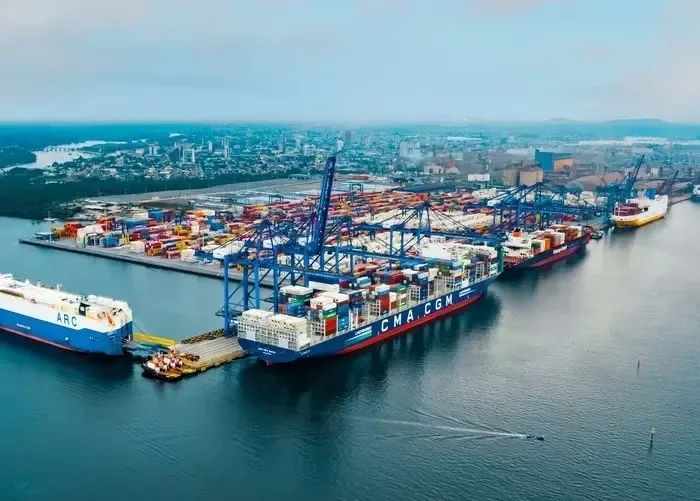
Brazil seeks R$ 1.2 billion in financing from the BRICS Bank for logistics infrastructure projects.
The Minister of Ports and Airports, Tomé Franca, visited Shanghai to present a portfolio of investment-potential infrastructure projects to the New Development Bank (NDB), also known as the BRICS Bank. The meeting with the institution’s president, Dilma Rousseff, primarily focused on raising funds for projects involving Brazilian ports, waterways, and airports.
This initiative is part of a broader government strategy to diversify the country’s transportation matrix. Currently, Brazil heavily relies on road transport, which accounts for over half of cargo movement, while railways, waterways, and air transport play secondary roles.
Investments for Future Logistics
The National Logistics Plan (PNL) 2050 outlines an ambitious R$ 1.2 trillion investment plan, encompassing both public and private funding, aimed at rebalancing the national logistics framework. The portfolio presented to the BRICS Bank is a key component of this strategy.
Projects such as the concession of navigation channels in strategic ports like Paranaguá, Rio Grande, Itajaí, and Santos are among the priorities. Additionally, the concession of port terminals and the expansion of waterways are also included in the list of investment opportunities.
The government has been working intensely to create a more attractive business environment, seeking partnerships that drive the development and competitiveness of Brazil’s logistics sector.
Success in Attracting Private Capital
Brazil’s port sector has shown positive performance in attracting private investments. Over the past three years, more than R$ 40 billion has been directed towards port projects, a direct result of increased competitiveness in government-led auctions.
This pursuit of financing from the BRICS Bank reinforces confidence in Brazil’s ability to attract international capital for essential infrastructure projects. Strengthening cooperation among BRICS countries can open new avenues for the country’s logistical and economic development.