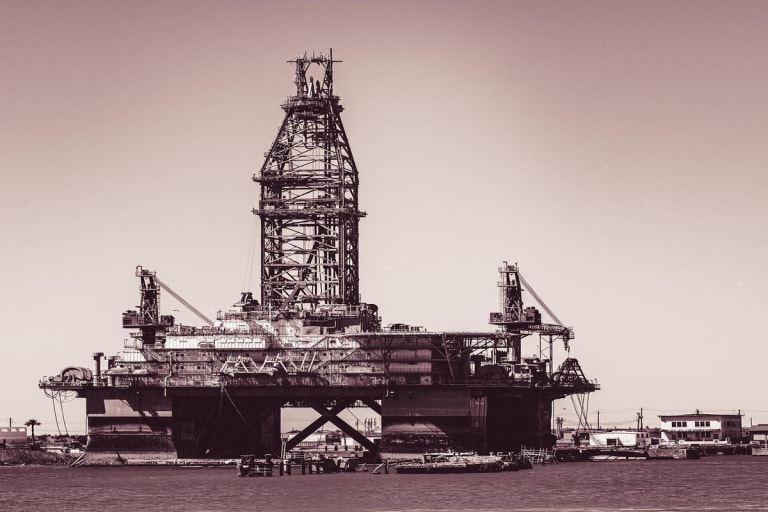

Petrobras Reveals Significant Hydraulic Fracturing Record in Brazil as STJ Postpones Fracking Regulation Decision.
The debate over the viability and impacts of hydraulic fracturing in Brazil has entered a new phase with data revealed by Petrobras. During a session at the Superior Court of Justice (STJ), the company reported conducting no less than 13,341 fracking operations nationwide. This figure spans a long period, from 1961 to the present year, 2024.
The central argument defended by the company is that, across this extensive series of procedures, no environmental damage has been directly attributed to the technique. This information was presented as a key point in the session aimed at defining the rules and authorization for fracking use in the exploration of unconventional oil and gas reservoirs.
Operational Data and Context
The survey, commissioned by Petrobras itself to support the legal proceedings, indicated the total number of operations. However, a crucial detail that still requires clarification is the breakdown of these procedures between conventional and unconventional reservoirs. It was also unclear whether the number refers to individual wells or specific operations.
The state-owned company emphasizes that the application of fracking in unconventional formations, such as shale gas, should be viewed differently from its historical use in other fields. For Petrobras, hydraulic fracturing is not new, having been commercially employed worldwide since the 1950s and present in Brazil for over six decades.
Company’s Defense and Divergent Views
The company argues that the mere offering of blocks for exploration or authorization for research does not constitute automatic approval for fracking.
The process, according to the company, is multifaceted, with rigorous regulatory and environmental controls at every stage. Economic viability and technical safety must be demonstrated before any production can begin.
Petrobras‘s stance is echoed by the National Agency of Petroleum, Natural Gas, and Biofuels (ANP) and the Federal Government (União). Both advocate for a careful analysis of each project individually.
Conversely, the Federal Public Prosecutor’s Office (MPF) and various environmental organizations raise concerns about the lack of scientific guarantees that rule out significant risks to aquifers and ecosystems, calling for a comprehensive strategic assessment before opening new exploration frontiers.
The Hearing and Its Next Steps
The hearing at the STJ, which seeks to establish a binding thesis on the subject, has been suspended. The case’s rapporteur, Minister Afrânio Vilela, requested time to deepen his vote and will analyze the presented arguments in more detail. The final decision has the potential to significantly shape the future of unconventional resource exploration in Brazil, balancing energy development with environmental protection.