ONS evaluates emergency plan for holiday, but curtailment chances are low.
Brazil’s National Electric System Operator (ONS) is closely monitoring the possibility of activating an emergency protocol for the September 7th holiday, which celebrates Independence Day. This plan, designed to manage excess power generation during periods of low demand, is a crucial tool for the stability of the National Interconnected System (SIN).
Despite the evaluation, the ONS considers the likelihood of intervention to be remote. Technical teams are closely monitoring operational conditions to ensure the electrical system operates safely and balanced, even in scenarios where supply exceeds consumption.
Constant Monitoring for System Stability
The final decision on activating the emergency protocol will be made on the preceding day, September 6th. The ONS uses daily planning for system operation, adjusting generation and transmission according to forecasted demand. In a released statement, the probability of activation for Sunday was classified as “medium,” while the risk for Monday was considered “low.”
The protocol in question was designed to prevent instabilities during periods of reduced consumption, such as holidays, weekends, and festive seasons. In these scenarios, industrial and commercial activity decreases, leading to an energy surplus on the grid.
Generation Curtailment to Ensure Balance
The measure aims to ensure balance between energy production and consumption. If the generation coordinated by the ONS is insufficient to contain the surplus, it may be necessary for distributors to restrict power production. This action is essential to maintain the security and stability of the national electrical grid.
Since its creation, the emergency plan has been activated on two occasions in 2026: on August 23rd and June 7th. Both activations occurred on Sundays, highlighting the importance of monitoring these lower-consumption days.
Plan Creation and the Impact of Solar Generation
The Emergency Plan for Managing Energy Surpluses in the Distribution Grid was approved by the National Electric Energy Agency (Aneel) in November 2025. The initiative required distributors to develop a plan to, if necessary, curtail power generation, including from smaller sources, to meet ONS requests.
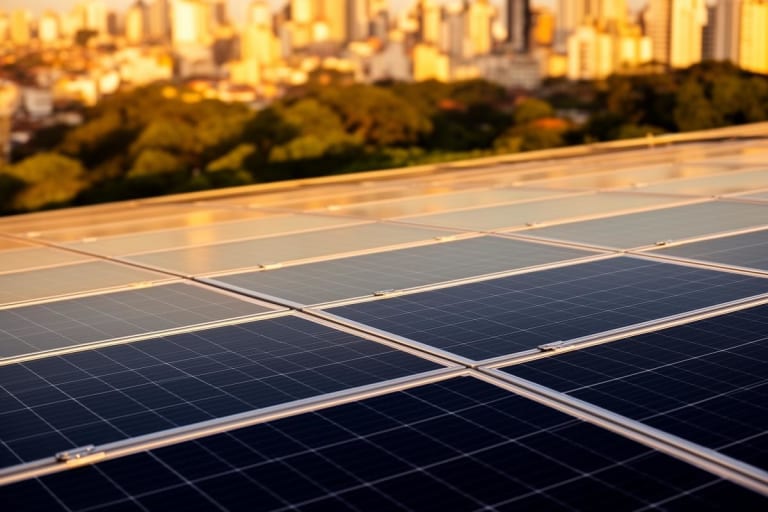
One of the factors considered in the protocol is the significant growth of distributed solar power generation, such as that from residential rooftops. This increase, when not matched by consumption, can create an instantaneous imbalance on the grid, compromising the ONS‘s ability to maintain operational security.
“Technical teams continue to monitor the situation to ensure proper operation during periods of reduced load,” stated the ONS, emphasizing its commitment to system robustness.
Preventing Risk Events
The creation of this plan was motivated by risk situations, such as those observed on Father’s Day 2025. On that occasion, solar generation reached nearly 40% of national demand during a low-consumption period. The grid operated with minimal safety margins, coming close to a momentary collapse.
To prevent such events from recurring, it was necessary to reduce generation from hydroelectric and thermal power plants, in addition to curtailing nearly 99% of output from large wind and solar farms. The emergency protocol is, therefore, an essential instrument for managing the energy transition and maintaining the reliability of electricity supply in Brazil, especially with the advancement of intermittent renewable sources.