Aneel plans to advance definitions on the cost allocation for storage systems, aiming to enhance legal certainty and attract investors to the December auctions.
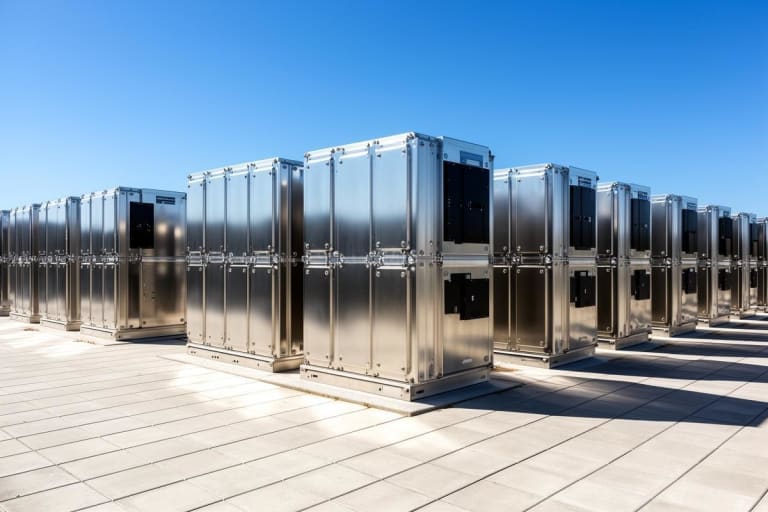
The National Electric Energy Agency (Aneel) is seeking to expedite the definition of the cost model for the upcoming capacity reserve auction, focusing on large-scale batteries. The agency’s director, Agnes da Costa, indicated during an event hosted by the National Electric System Operator (ONS) that the body is studying the acceleration of debates originally scheduled for 2027, ensuring greater predictability for those interested in the auction set for December.
This move is strategic for the clean energy sector, as Brazil prepares for its first dedicated storage auction. With expectations to contract approximately 6,000 MW of capacity, the project has attracted massive interest, registering over 6,000 proposals submitted for 15-year contracts scheduled to become operational in 2028.
Challenges in Storage Regulation
Although the first regulatory round, approved in June, established the fundamental guidelines for equipment connection and operation, significant commercial gaps remain. Investors’ primary concern lies in how financial charges will be distributed among generation companies. Current legislation imposes costs solely on generators, but the exact calculation method remains open.
The uncertainty regarding how much each source—such as wind, solar, or hydroelectric power—will need to contribute generates unease. For Agnes da Costa, resolving this issue is the most urgent step. Regarding the impasse, the director stated:
“The generators don’t want to pay for it. And then, you know… it complicates things.”
Potential Legislative Changes
The regulatory landscape faces external pressures due to bill 3.716/2026, currently under consideration in the Chamber of Deputies. The text proposes a structural change in cost allocation, suggesting that the cost of batteries should not be limited to generators but diluted across all links in the chain, including distribution and transmission companies, under the argument that storage benefits the entire National Interconnected System (SIN).
While the Legislative Branch has not defined a new rule, Aneel is working to enable the current model, seeking to reconcile the financial viability of the system with the expectations of market agents.
The Future of Revenue Stacking
Beyond the dispute over cost-sharing, the agency is studying the “revenue stacking” model. This concept allows owners of storage systems to maximize their profitability by exploring different grid services.
The goal is to enable batteries to operate optimally: buying energy when prices are low and selling during peak demand, provided this flexibility does not compromise the contracted availability for capacity reserve.
The expectation is that these additional definitions, integrated into a more agile regulation schedule, will solidify the role of batteries as pillars of stability for Brazil’s energy transition in the coming years.