

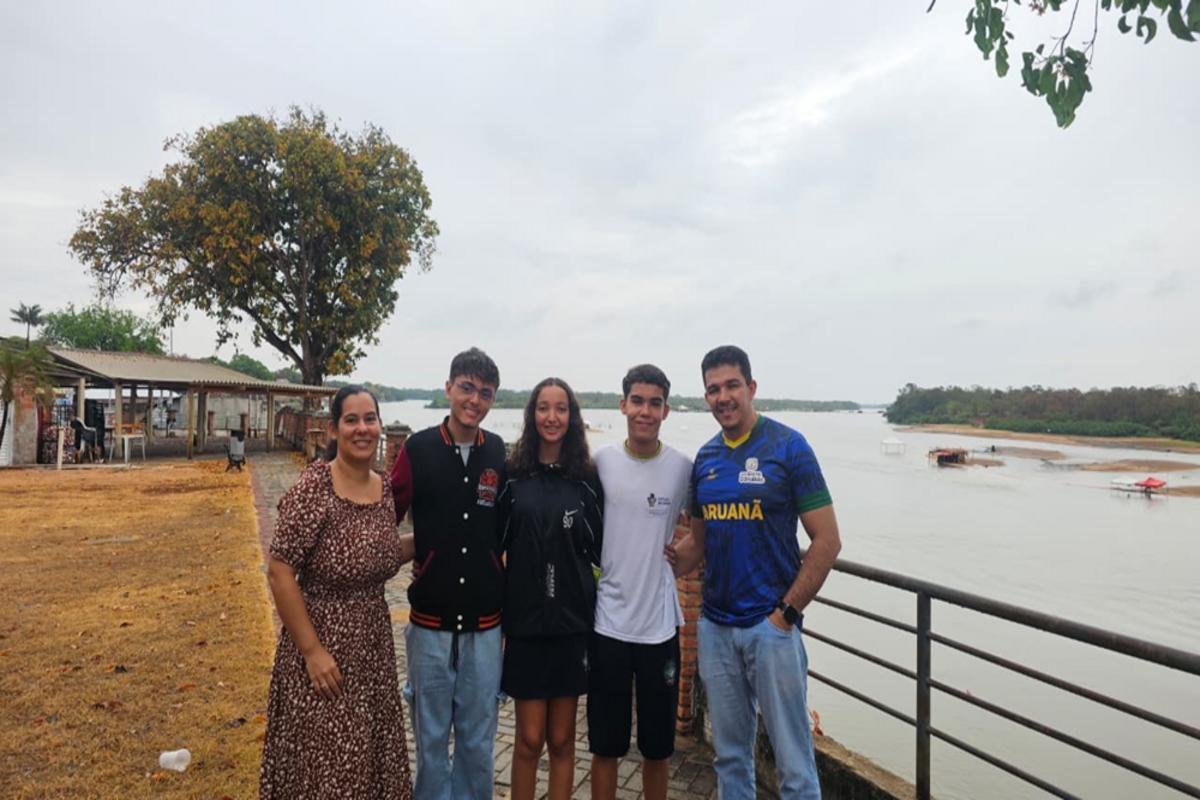
Goian students develop the EcoRibeirinho project, using sensors and the Internet of Things to monitor water quality in the Araguaia River and promote sustainable fishing, reaching the final of the Solve for Tomorrow program.
Celebrated on November 21, World Fisheries Day draws attention to the urgency of preserving aquatic ecosystems and the rational use of natural resources. In Aruanã, in the interior of Goiás, young students found in clean energy and technological innovation solid paths to tackle this environmental challenge. As a finalist in the 13th edition of Solve for Tomorrow Brazil, the EcoRibeirinho project proposes an intelligent monitoring system for the Araguaia River.
The initiative was born directly from local reality. Along the banks of the Araguaia and Vermelho rivers, the community faces recurring episodes of fish mortality and visible changes in the water. Since fishing activity represents the main source of income for many families, the group decided to investigate how technology could help prevent severe impacts on aquatic life and secure the region’s economic future.
Under the guidance of Professor Flaviane Borges Teixeira Medrado, the class developed a prototype focused on vital indicators, such as dissolved oxygen levels. This measurement is essential for diagnosing the environmental health of rivers and anticipating ecological crises.
“When we interviewed fishermen, we noticed a difficulty in obtaining equipment to measure dissolved oxygen, so we thought of a solution that could contribute to this monitoring.”
IoT Innovation and Technology in the Field
The EcoRibeirinho ecosystem turns raw data into strategic information for the community. Using the Internet of Things, the system collects metrics at specific points in the water source, quickly identifying the discharge of organic matter or other threats to ecological balance.
This practical application reinforces the importance of the STEM (Science, Technology, Engineering, and Mathematics) approach in solving real problems. Robotics and programming joined forces with biology to create tools for sustainable development applied directly to riverine daily life.
The Role of Scientific Education
For Helvio Kanamaru, director of Samsung, the project illustrates the true potential of youth when supported by corporate citizenship programs. The initiative promotes environmental education and demonstrates that technological innovation walks hand in hand with the preservation of natural resources.
The Solve for Tomorrow Brazil program continues to transform educational landscapes, reaching hundreds of thousands of students. With institutional support from Cenpec, the current edition stands out for its growth in female participation and inclusion of rural schools.
The impact of these initiatives directly resonates with the future of national sustainability. As new talent embraces technology to protect water resources, a path opens for a growth model where environmental preservation and local economies move in perfect harmony.