XCMG has completed one of Brazil’s largest electric truck deals, selling 251 units to Navarini for R$500 million in a contract focused on sustainable agribusiness.
The Brazilian heavy-duty vehicle market has just registered a historic milestone for sustainable mobility. Chinese giant XCMG has formalized the sale of 251 electric trucks to the carrier Navarini, in a robust investment of R$500 million. This strategic move consolidates the expansion of Chinese manufacturers in the country, overcoming trade barriers imposed by other global powers like the United States and the European Union.
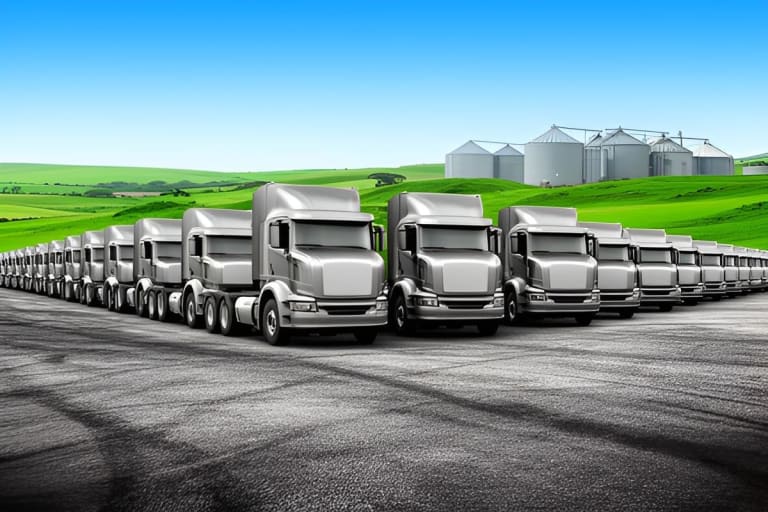
The model chosen for this operation was the E7-95T, a road giant with a Gross Vehicle Weight (GVW) of 74 tons, capable of hauling up to 120 tons. Unlike conventional urban applications, these vehicles will be destined for long-distance agricultural cargo transport, challenging the perception that battery technology would be limited to short-range deliveries.
Technology and Sustainability in the Field
The finalization of this contract, signed in the Chinese city of Xuzhou, is the result of months of rigorous testing on Brazilian soil. The analysis covered everything from local terrain to the specific demands of crop harvesting, ensuring that electrification delivered the necessary performance for agribusiness.
This deal represents much more than just selling trucks. After months of work, operational studies, terrain analysis, understanding customer needs, and real-world testing, we have arrived at a solution capable of combining productivity, operational efficiency, and sustainability.
— Hilário Matzenbacher, executive at XCMG.
For Navarini, the initiative goes beyond fleet renewal. The carrier’s founder, Luis Fernando Navarini, highlights that the project aims to break cultural barriers and prove that electrification is viable in the heavy-duty sector. According to the businessman, the goal is to demonstrate that electric trucks can operate efficiently, even under the adverse conditions of the country’s dusty rural roads.
The Global Scenario and the Infrastructure Challenge
Brazil’s progress mirrors a global trend. According to the International Council on Clean Transportation, sales of electric trucks and buses nearly doubled globally in 2025, with China leading 90% of this volume. However, the bottleneck for large-scale electrification remains the charging infrastructure.
Our goal was never just to buy electric trucks, but to change the transportation culture in Brazil and prove that electrification works where no one believed it would: in heavy-duty, long-distance transport, through the dusty harvest season.
— Luis Fernando Navarini, founder of the transport company.
Although ABVE points out that Brazil already has about 30,000 charging points, most are low-power, intended for passenger cars. The challenge, shared by markets like Europe’s, is to create an ultra-fast charging network capable of meeting the logistical demands of heavy-duty vehicles. The energy transition in the freight sector, therefore, now depends on synchronized investments in infrastructure for zero-emission technology to become the new standard on Brazilian highways.