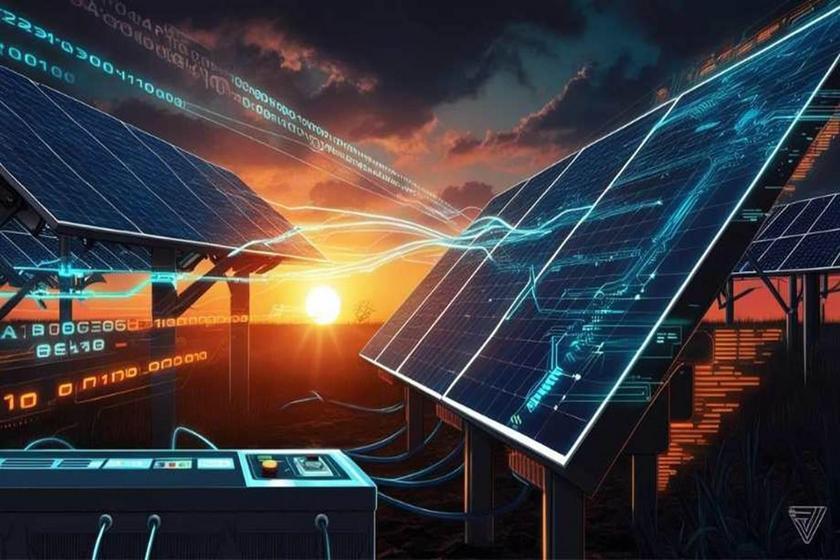
In three years of operation in the subscription solar energy market, Órigo Energia has provided accumulated savings of R$267 million on its customers’ electricity bills, driving the expansion of distributed generation in Brazil.
Reducing recurring expenses and balancing budgets has become a priority for families and small businesses across the country. In this scenario, electricity bills often weigh heavily on household and corporate budgets, creating an opening for alternatives that offer real financial relief and promote sustainability.
It is precisely in this context that subscription solar energy is consolidating itself as a viable and high-impact solution. Acting as a pioneer in this market, Órigo Energia has reached the significant milestone of R$267 million in savings generated for its consumers over a three-year period, proving that the transition to a clean energy matrix can go hand-in-hand with economic efficiency.
Aurélio Bustilho, CEO of Órigo Energia, stated:
There is still a myth that solar energy is expensive and inaccessible. Today, it is no longer a privilege for the few and has become more present in the lives of thousands of families and small businesses. Órigo’s mission is precisely to democratize access to solar energy in Brazil through a shared generation model that allows individuals and companies to save on their electricity bills without needing to install solar panels.
The accelerated growth of distributed generation in Brazil
The distributed generation sector has registered significant advancements in recent years. According to data from ANEEL, installed capacity jumped from 36.2 GW in 2024 to approximately 45 GW in 2025, while the number of consumers served reached 7.2 million.
This accelerated growth features strong protagonism from residential consumers, who represented 62.4% of consumer units at the beginning of 2026. The commercial segment accounted for 24.4%, followed by the rural sector with 10.6%, highlighting the reach of renewable energy in the country.
How Savings Work in Practice
In the shared energy model operated by the company, bill reductions can reach up to 30%. The exact percentage varies depending on factors such as state, local utility, and each customer’s consumption profile.
Aurélio Bustilho declared:
We do not work with a single monthly savings amount because the result varies significantly according to consumption and the characteristics of the consumer unit. Naturally, a company or rural property with higher consumption may have a greater nominal saving than a residence, even if the percentage of savings is similar.
The process is entirely digital. The customer remains connected to their local utility but begins to receive credits for the clean energy produced at a solar farm. Contract management and savings monitoring can be conveniently done through a dedicated app and portal.
Proven Financial and Social Impact
Ending 2025 with 115,000 customers and 420 solar farms, the company generated approximately 1,142 GWh of clean energy. The evolution of savings delivered to consumers is evident: it increased from R$50 million in 2023 to R$81 million in 2024, surpassing R$136 million in 2025.
The model also strengthens social impact initiatives, such as the Órigo Social Program, which last year benefited 73 institutions with about R$900,000 in electricity bill savings, freeing up resources for these organizations to focus on their core activities.
Aurélio Bustilho highlighted:
The expansion of shared generation shows that access to solar energy can happen simply and without the need for investment in proprietary infrastructure. Our goal is to continue expanding this access, bringing savings to more consumers and contributing to an increasingly renewable energy matrix.
With the continuous evolution of the subscription solar energy sector, the expectation for the coming years is that more consumers will discover the benefits of financial and environmental sustainability. The consolidation of accessible clean energy models reinforces the strategic role of distributed generation in building a more decentralized, efficient, and accessible energy future for all of Brazilian society.