Advances in new smart metering regulations in Brazil are drawing the attention of Finnish giant Wirepas, which is betting on decentralized connectivity to revolutionize clean energy efficiency in the country.
The Brazilian energy transition is gaining traction amid debates on modernizing the national metering fleet.
Faced with a continental territory and the gradual opening of the free energy market, international companies are turning their eyes to the technological potential of the Brazilian power sector, seeing a unique opportunity to deploy advanced management and connectivity solutions.
Wirepas, a company originally from Tampere, Finland, has been conducting strategic talks with several local utility distributors.
The goal is to introduce wireless communication systems into the national ecosystem that transform consumption reading into a decentralized operation, overcoming historic infrastructure bottlenecks and optimizing electricity distribution.
Wireless connectivity and the smart meter landscape in Brazil
The Brazilian market offers a vast horizon for innovation.
With an estimated base of ninety million meters, the country currently has a digitalization rate of just five percent, leaving a massive margin for the expansion of so-called smart grids.
To accelerate this transformation, the Ministry of Mines and Energy set annual targets for utilities to install modern equipment in at least two percent of their customer bases.
The regulation of this guideline is underway at Aneel, creating a favorable regulatory environment for innovation.
Industry experts state:
“This is a great step because it encourages companies to test smart metering, ensuring they understand the technology’s benefits for their businesses and analyze how to finance it.”
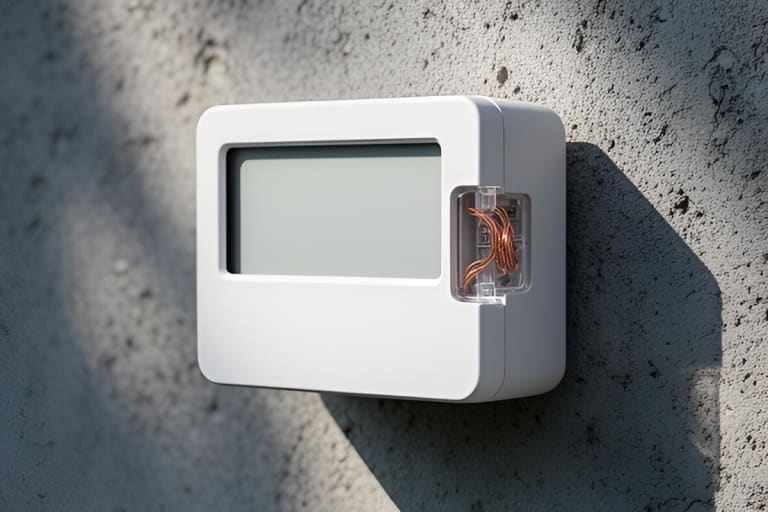
The technology developed by the Finnish company eliminates the need for complex antennas or cabling, allowing the devices themselves to form a collaborative network.
This feature facilitates deployment in remote or hard-to-reach regions, enabling real-time monitoring even in vulnerable areas.
Transition challenges and sustainability in the power grid
The operational complexity of modern power grids has been growing globally.
The expansion of data centers and the rising popularity of electric vehicles require precise balancing between supply and demand, avoiding waste and unnecessary costs associated with system overload.
On the national stage, the advance of distributed generation and hydrological fluctuations resulting from drought periods pose additional operational challenges.
The lack of adequate transmission infrastructure often results in curtailment of renewable generation, highlighting the urgent need for a smarter, more resilient infrastructure.
Industry representatives emphasize:
“In many cases, energy costs can be reduced by 30% to 50% simply by balancing the grid.”
International experience shows that large-scale adoption of autonomous networks brings significant efficiency gains, as seen in European capitals where constant data transmission supports immediate operational decisions.
The expectation is that, with the consolidation of new regulations, the Brazilian electricity sector will move toward a more integrated, sustainable model prepared for the future of renewable energy.