

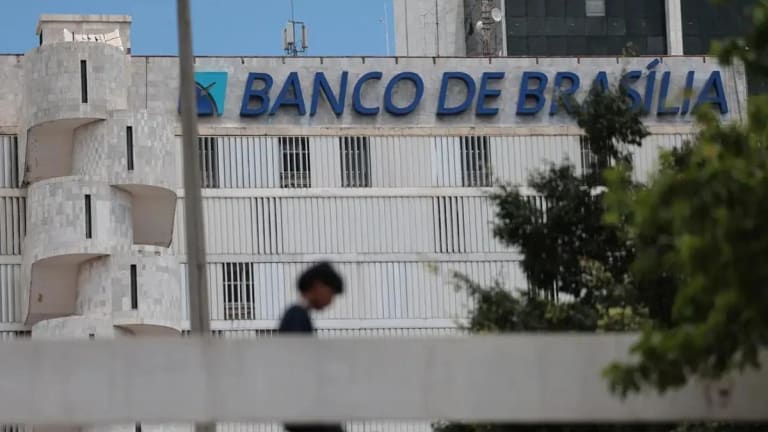
Federal Police documents reveal that Master Bank used R$ 7 billion in revolving debt from Will Finance as collateral in risky transactions with BRB.
The complex web of financial transactions involving Master Bank and Banco de Brasília (BRB) has just taken on even more critical dimensions.
Investigations by the Federal Police (PF) uncovered the use of billions of reais in credit card debt from Will Finance as security in structured deals with the district public institution.
The episode, now part of the evidentiary framework for ongoing legal disputes, exposes the fragility of the assets that underpinned the relationship between the two banks before the collapse of the conglomerate controlled by entrepreneur Daniel Vorcaro.
The amount, which reaches R$ 7 billion, was backed by more than 9 million Bank Credit Bills (CCBs) originating from Will Finance’s revolving credit.
The revelation, based on a technical note from the Central Bank (BC), calls into question the governance of the era and reinforces suspicions about the solidity of the guarantees presented to BRB during the expansion and acquisition talks that marked the institution’s recent period.
Ignored alerts and fragile guarantees
The operation did not go unnoticed by regulatory bodies.
In May 2025, the entity responsible for asset registration at the Brazilian Stock Exchange warned the Central Bank about the peculiar nature of the guarantees offered by Master.
The institution’s intention to update balances and maturities of the securities monthly raised immediate concerns that the contracts might be delinquent or carry a credit risk incompatible with the safety standards required for transactions of this magnitude.
“For the Central Bank’s technical team, this practice suggested that the contracts could be missing regular payments or presented a high risk of default.”
The BC technicians were precise in analyzing the transaction design, raising two worrisome hypotheses.
The first suggested an informal attempt to incorporate Will Finance into BRB before any regulatory authorization.
The second highlighted a desperate liquidity support maneuver, a tactic to keep the Master structure operational and prevent an imminent collapse while negotiations with the Brasília bank failed to materialize.
Legal Consequences and the End of the Line
The outcome for the involved institutions was inevitable after a series of warnings and the Central Bank‘s veto on the purchase of part of the Master by the BRB, a decision formalized in September 2025.
Months later, insolvency became unavoidable, leading to the extrajudicial liquidation of Daniel Vorcaro‘s bank and, subsequently, Will Financeira in January 2026.
Today, the scenario is unfolding in the criminal arena through Operation Compliance Zero.
The Federal Police is investigating deep irregularities, including the sale of credit portfolios that allegedly had no real backing or proof of existence, amounting to billions in losses that are under judicial scrutiny.
The ongoing investigations keep the BRB and its former managers under constant legal pressure, while the market waits for the next steps in a process aimed at compensating the losses caused by this highly reckless credit strategy.
The exposure of the Federal District to these financial risks makes the case a watershed moment for national banking supervision.