
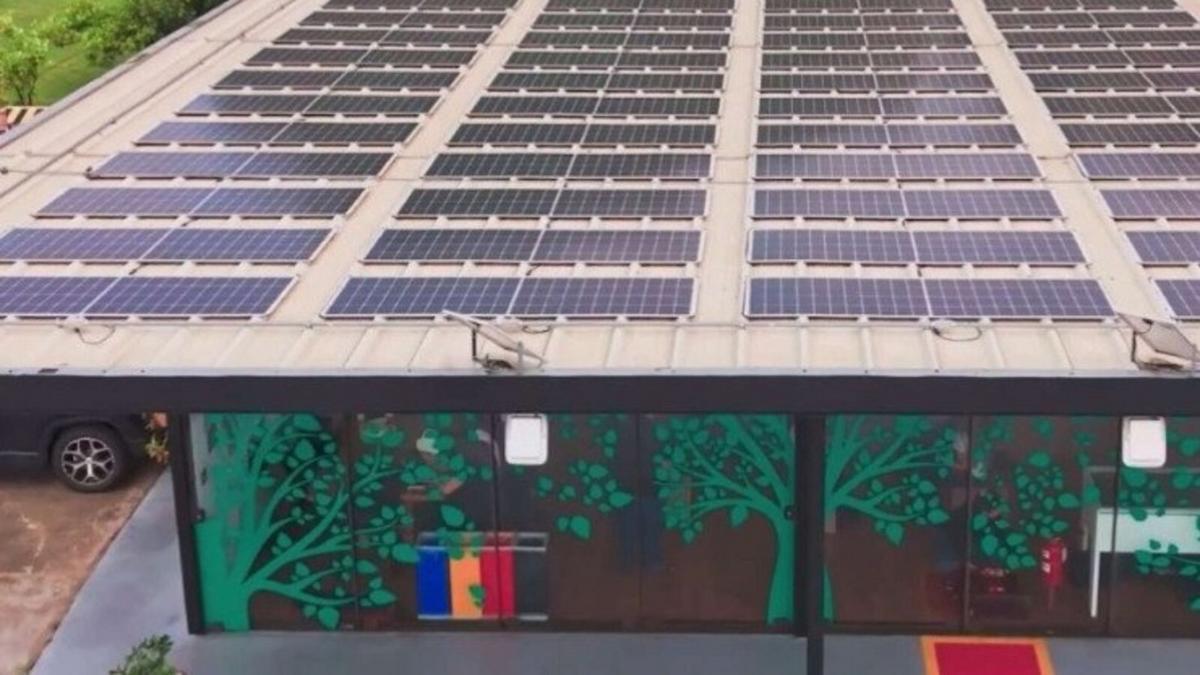
Stellantis tests Power Clean project in Betim, featuring 46 solar shingles and lithium batteries that generate more energy than the initial consumption of the innovation space.
The Betim Automotive Hub, located in Minas Gerais, has become the stage for a sustainable breakthrough in the automotive industry.
Stellantis has implemented an innovative photovoltaic generation system to optimize the electrical consumption of its manufacturing complex.
Named Power Clean, the pilot initiative combines direct solar capture with high‑technology storage.
The main goal is to reduce the plant’s operating costs and lessen dependence on the conventional power grid during peak demand periods.
The installation has already shown promising results in early operational tests.
Surprisingly, the system was able to generate an amount of electricity that exceeded the consumption recorded by the structure where it was installed.
Sustainable technology conceived by employees
The idea originated from the company’s own talent, thanks to the efforts of employees Karla Abranches and Sandra Soares.
They designed the project to meet the company’s decarbonization and energy self‑sufficiency goals.
The structure was assembled at Casa InovEN, a sustainability‑focused space within the industrial complex.
The system uses 46 lightweight photovoltaic shingles designed to deliver a peak power of approximately 15 kWp.
To ensure consistent supply, the ecosystem incorporates six lithium batteries.
This reserve allows excess solar energy to be stored for use during high‑demand periods or when sunlight is limited.
The creator stated:
The goal is to test a viable alternative to reduce grid electricity purchases and decrease reliance on fossil sources.
Encouraging intra‑entrepreneurship in South America
The project’s feasibility was supported by Star*Up, the company’s global program aimed at boosting intra‑entrepreneurship.
The tool provided funding for equipment acquisition and specialized technical consulting to the idea’s creators.
In addition, the initiative is linked to the Digital Challenge, a regional event that covers operations in Brazil, Argentina, and Chile.
In its most recent edition, the competition mobilized more than a thousand participants and received over a hundred innovative proposals.
Currently, the Power Clean project is undergoing a rigorous phase of monitoring and technical data collection.
Engineers at the manufacturer are evaluating the system’s real-world performance, material durability, and the effective reduction in carbon emissions.
If the technology proves its economic and operational viability at scale, Stellantis could expand the solution to other factories.
This progress reinforces the automotive sector’s commitment to the energy transition and environmental responsibility.