
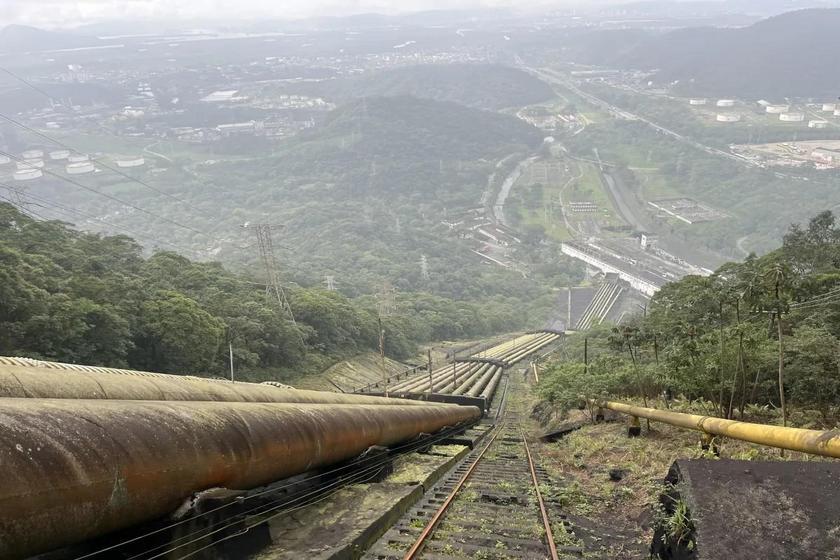
Inaugurated in the 1930s and bombed during the Constitutionalist Revolution, the historic Henry Borden power plant reaches its centennial while operating as a giant battery to ensure the stability of the Brazilian power grid.
The iconic Henry Borden power plant, nestled in the imposing Serra do Mar mountain range, is celebrating its centennial, solidified as one of the most important pillars of clean energy and the energy transition in Brazil.
Inaugurated in the 1920s, the hydroelectric plant represented a revolutionary milestone in global engineering and held the title of the largest and most modern power plant in the Southern Hemisphere for over 40 years.
The plant’s century-long journey has spanned armed conflicts and profound industrial transformations, while shaping the geography of the São Paulo coast.
Connected to the SIN (National Interconnected System), the facility leverages an impressive vertical drop of nearly one kilometer to generate electricity that supplies the country, utilizing a steep transport system known as a funicular.
The “Battery” of the National Power System
Today, the plant’s function goes far beyond conventional power generation.
It acts as a strategic battery for the Brazilian power sector.
When national demand surges—especially at night, when solar energy generation drops off—Henry Borden steps in to quickly meet the load.
Management at Engie stated:
“Over the course of a century, Henry Borden has kept pace with the transformations of the power sector and continues to play a relevant role for São Paulo and the country. It combines history, strategic relevance, and the ability to respond to the needs of the National Interconnected System.”
The complex can reach its maximum available capacity in just fifteen minutes.
Composed of both underground and surface structures, the plant is a testament to the resilience of national engineering, having even withstood a bombing during the 1932 Constitutionalist Revolution, where a projectile that struck the turbine area miraculously failed to explode.
Legacy and Sustainability
Although it served as the engine for industrial growth and the modernization of the state capital, the scale of the project came with a high environmental cost.
To ensure water flow in the Serra do Mar, the project required the redirection of the Pinheiros River and the construction of the Billings Reservoir—geographic changes that still impact urban drainage and create ecological challenges today.
Despite these historical impacts, the complex keeps its community alive through its charming worker’s village.
Entire families have dedicated generations to operating the plant, perpetuating technical knowledge and a passion for hydroelectricity.
As Brazil advances in diversifying its energy mix with renewable sources, the centenarian Henry Borden power plant proves that the innovation of the past remains indispensable for ensuring the energy security of the future, reaffirming the vital role of sustainable infrastructure in the modern era.