
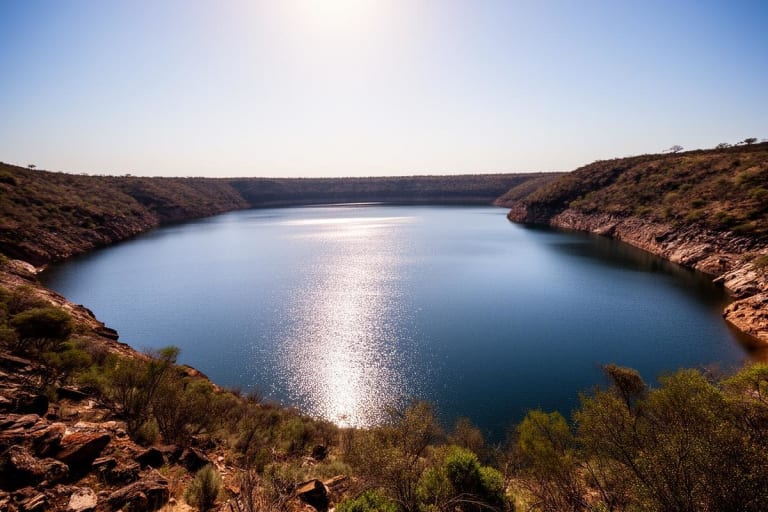
Reservoir monitoring reveals a contrasting scenario in the country: while the Southeast and Midwest maintain 62.8% of their capacity, other regions face slight hydrological declines.
The current landscape of hydroelectric power in Brazil presents important nuances for the electricity sector. According to the latest operational data, the subsystem comprising the Southeast and Midwest regions — which holds the majority of the country’s reservoir capacity — maintains a solid storage level, reaching 62.8%.
This index is a fundamental indicator for national supply security and reflects the strategic management of water resources in these vital areas for the energy matrix.
In contrast, the other Brazilian regions observed small negative variations in their operational volumes. The South submarket, which plays a strategic role in the interconnection of the National Interconnected System (SIN), registered a reduction of 0.3 percentage points.
Similarly, the North and Northeast regions also showed a downward trend, with a drop of 0.2 percentage points each, signaling a constant need for attention from regulatory bodies in the clean energy sector.
Reservoir Dynamics and Energy Security
Water management is one of the pillars for the sustainability of electricity supply in Brazil. Although localized variations in the North, Northeast, and South subsystems are considered discreet, they reinforce the importance of a diversified energy matrix.
Integration among the regions allows the country to offset regional fluctuations, ensuring that the impact of hydrological declines in one part of the map does not compromise the stability of the system as a whole.
The stability of the national electricity system depends not only on current capacity but also on the ability to monitor these regional fluctuations in real time, integrating complementary renewable sources to mitigate risks of hydrological variation.
Outlook for the Future of the Sector
Monitoring reservoir levels is a vital practice for optimizing system operations. With the Southeast/Midwest maintaining a balanced position at 62.8%, the energy sector operates with a comfortable safety margin, but remains alert to the seasonality influencing the North and Northeast regions.
In the long term, the trend is for Brazil to continue expanding its installed capacity in non-hydro renewable energies, such as wind and solar, to reduce exclusive reliance on rainfall.
For the sustainability market, the focus remains on infrastructure resilience. The ability to navigate these small regional declines without affecting the end consumer demonstrates the robustness of the SIN.
The sector now turns its attention to hydrological projections for the coming months, which are essential for defining power plant dispatch strategies and managing energy prices in the free contracting environment.