
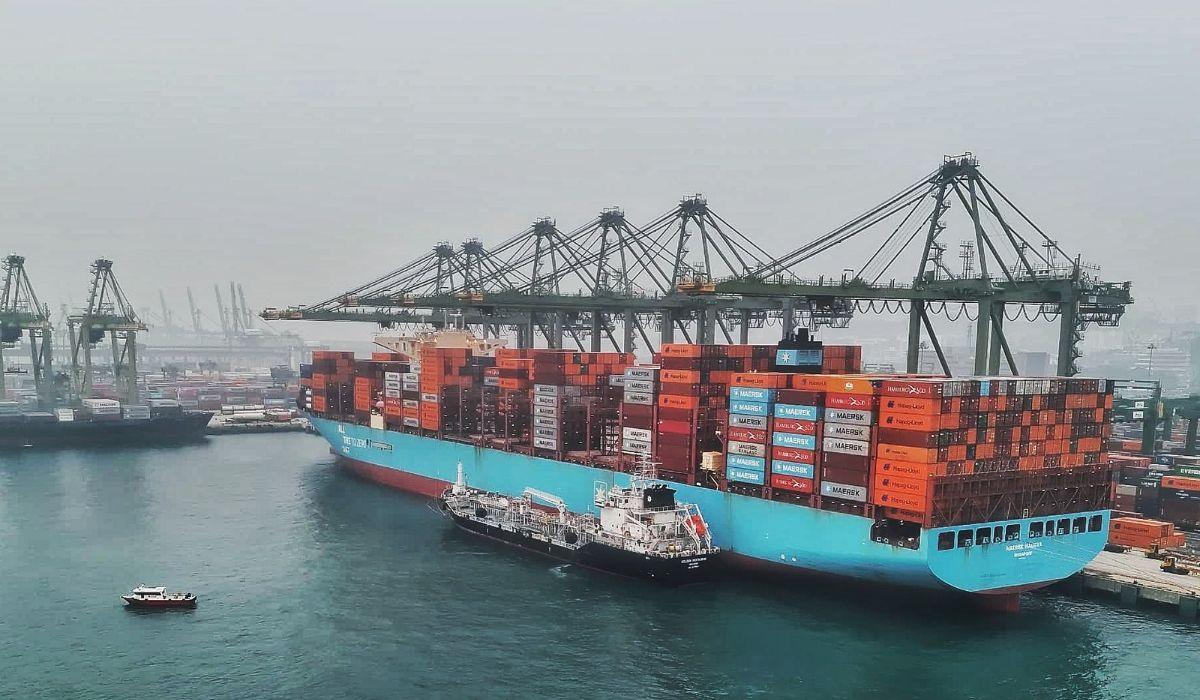
Singapore executes the world’s largest maritime biofuel bunkering operation, transferring 5,000 metric tons to the Maersk Halifax, driving global energy transition.
The port of Singapore has solidified its role in the clean energy transition by conducting the largest maritime biofuel bunkering operation in history. The milestone involved the transfer of approximately 5,000 metric tons of sustainable bioethanol to the container ship Maersk Halifax, in an unprecedented procedure overseen by the Maritime and Port Authority of Singapore (MPA).
The initiative aims to test the viability of using biofuels on large commercial vessels, leveraging the existing logistics infrastructure for alternative fuels. The operation took place at the Pasir Panjang terminal, operated by PSA Singapore, and occurred simultaneously with the vessel’s cargo operations, demonstrating high operational efficiency.
Methanol Infrastructure Adapted for Bioethanol
The primary objective of the test on Asian soil is to assess whether the technical standards and bunkering equipment developed for methanol can be directly applied to ethanol. As both are alcohol fuels, local authorities and industry players are seeking to optimize costs and processes in the maritime industry.
The transfer was carried out by the chemical tanker Golden Centaurus, operated by Golden Island, using advanced mass flow metering systems. The fuel supplied holds international sustainability certification, reinforcing the companies’ commitment to reducing greenhouse gas emissions.
Those involved in the logistical project highlighted:
This historic operation demonstrates how cooperation among industry leaders can accelerate the development of viable solutions for the decarbonization of global shipping.
Next Steps for Shipping Decarbonization
The vessel Maersk Halifax is not an ordinary ship, having undergone a conversion in 2024 to operate with dual-fuel engines. This flexibility allows the global fleet to test different energy sources without relying exclusively on the manufacturing of new vessels.
With the data collected during the bunkering in Singapore, regulatory bodies and shipowners can refine safety, storage, and handling protocols for bioethanol. The industry expects the results to serve as a basis for standardizing the use of renewable fuels on long-haul commercial routes in the coming years.