
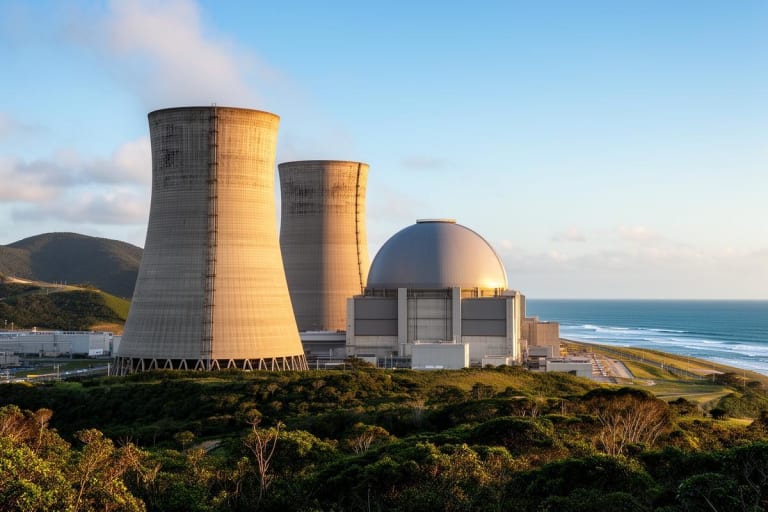
The Ministry of Mines and Energy is seeking a definitive resolution on the future of the Angra 3 nuclear power plant by the end of 2026, as signaled by Minister Alexandre Silveira.
The future of the Angra 3 construction project is expected to reach a conclusion in the coming months. The Minister of Mines and Energy, Alexandre Silveira, reaffirmed on Wednesday (2) that the federal government is committed to presenting a plan for the completion of the nuclear plant throughout 2026. The final decision rests with the National Energy Policy Council (CNPE).
When asked about deadlines, the minister remained optimistic:
Yes, this year. I won’t say the plan, but it could happen this year.
The plant, which began construction in the 1980s, has faced a history marked by long hiatuses, with activities suspended since 2015, when it reached 66% physical completion.
Financial challenges and the cost of abandonment
The Angra 3 completion project is a complex engineering and capital management challenge. With a historical investment of approximately R$ 12 billion already spent, a recent report by BNDES indicates that an additional R$ 23.9 billion would be required to make the final delivery of the unit viable.
On the other hand, the alternative of abandoning the plant altogether also imposes heavy costs on the public treasury. Estimates suggest that the cost of abandonment—which would include contract termination, site demobilization, debt repayment, and the total loss of previous investments—would range between R$ 22 billion and nearly R$ 26 billion.
Currently, maintaining the dormant structures and servicing debt requires an annual expenditure of around R$ 1 billion by Eletronuclear.
The role of nuclear energy in the transition
The uncertain scenario even prompted recent action by the Federal Court of Accounts (TCU), which opened a proceeding at the end of August to analyze the next steps for the venture. According to Alexandre Silveira, negotiations between the Ministry and the Chief of Staff’s Office (Casa Civil) are advancing with the aim of modernizing the state-owned company.
Alexandre Silveira reiterated:
We want to move forward with Angra 3, we want to modernize Eletronuclear. We are working toward that.
Beyond economic viability, the government views nuclear power as a strategic pillar for Brazil’s energy transition. Silveira advocates for the diversification of the energy matrix, highlighting the country’s self-sufficiency in uranium reserves and the potential to strengthen the domestic atomic fuel production chain as decisive assets for the future of the electricity sector.