
The Senate unanimously approved the National Policy on Critical Minerals, boosting clean energy and electric mobility in Brazil.
The Upper House has given the green light to legislation that promises to redefine the future of clean energy and electric mobility in Brazil. On Wednesday, the Federal Senate approved Bill No. 2.780/2024, which establishes the National Policy on Critical and Strategic Minerals. The text, now heading for presidential sanction, was ratified without any changes in substance compared to the version approved by the Chamber of Deputies in May.
This swift legislative process and the full retention of the bill demonstrate a rare and essential political consensus for the measure’s expediency. The strategy of the rapporteur in the Lower House, Senator Eduardo Braga (MDB-AM), who made only formal adjustments, ensured the bill did not need to return to the Chamber, speeding up its enactment.
A Milestone for the Energy Transition
The new policy represents a fundamental regulatory milestone for both the electricity sector and the electric mobility industry. It establishes clear guidelines to foster research, mining, processing, and the development of the entire production chain of essential elements.
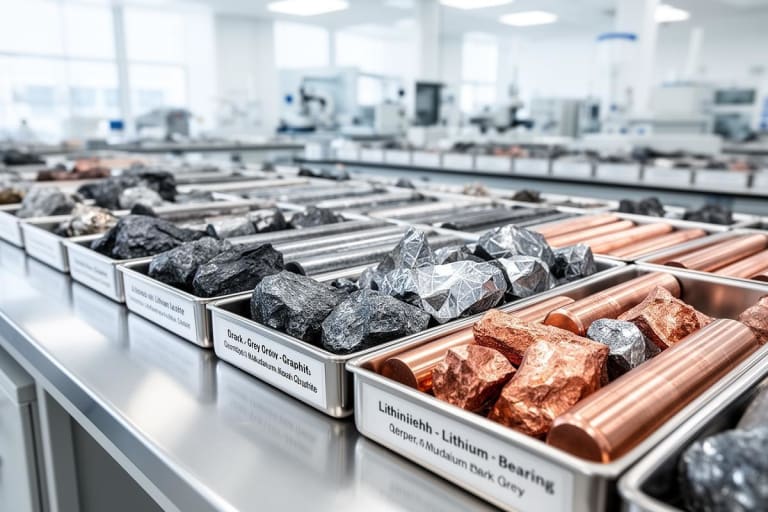
Minerals such as lithium, cobalt, nickel, rare earths, copper, and graphite are vital components for manufacturing cutting-edge technologies. They form the basis for energy storage systems in batteries (BESS), photovoltaic solar panels, wind turbines, and electric vehicles. Security in the supply of these critical minerals is therefore a prerequisite for the advancement of decarbonization and sustainability.
Ensuring Competitiveness and Autonomy
With the transmission margins in the National Interconnected System (SIN) nearing capacity and the growing need to store intermittent renewable energy, self-sufficiency in critical minerals becomes imperative. Market experts point to this policy as crucial for mitigating risks of external dependency, ensuring Brazil‘s competitiveness in global clean technology supply chains.
The approved text consolidates mechanisms aimed at attracting private capital, simplifying environmental licensing processes, and stimulating basic geology within national territory. The productive sector expects this new legislation to guide the planning of the Ministry of Mines and Energy (MME) and the Geological Survey of Brazil (SGB-CPRM) in identifying strategic reserves.
The approval of this policy is a decisive step for Brazil to consolidate its position as a global player in the energy transition, ensuring the supply of essential inputs for the green technologies of the future.
Next Steps: The Regulatory Phase
With the imminent presidential sanction, the focus will shift to the subordinate regulatory phase. It will be up to the Executive Branch to define the governance of the interministerial committee responsible for periodically updating the list of strategic minerals. Furthermore, priority criteria for public financing of projects in the sector will be established.
The effective implementation of this policy is vital for Brazil not only to keep pace with but to lead the global energy transition. By ensuring the supply of critical minerals and stimulating their production chain, the country reinforces its technological and environmental sovereignty, creating a favorable environment for investments in renewable energy and sustainable solutions.
This is a strategic move for economic development and for Brazil‘s commitment to a greener future.