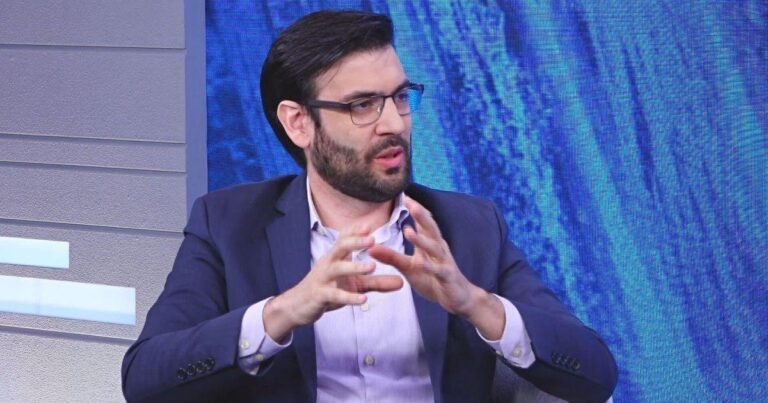
Sandoval Feitosa, director-general of Aneel, vehemently rejects accusations of a “witch hunt” by Enel, defending the regulatory agency’s integrity in its review of the energy concession.
Brazil’s power sector faced a moment of high regulatory tension this Tuesday (Aug 11, 2026), when the director-general of Aneel (the Brazilian Electricity Regulatory Agency), Sandoval Feitosa, delivered sharp criticism regarding challenges raised against the agency’s work. The debate took place during the judgment of an appeal by Enel São Paulo regarding the recommendation process for the forfeiture of its power distribution concession.
In a pointed speech, Feitosa refuted insinuations that Aneel was acting with disproportionality or bias. Sandoval Feitosa’s firm response highlights the agency’s commitment to transparent and rigorous regulation, reaffirming the legitimacy of the actions taken in the case of Enel—one of the country’s largest distributors—and sending a clear signal to the clean and sustainable energy market about the integrity of the rules of the game.
Divergent views in the power sector
During the review of the appeal, Enel’s defense presented arguments contesting evaluation indicators and performance criteria applied by the agency, alleging that some were not contractually stipulated. Abradee (the Brazilian Association of Electric Power Distributors) expressed concern that the process could increase risk perception for distribution concessions in Brazil.
Following the unanimous rejection of Enel’s appeal by Aneel, Sandoval Feitosa reacted to the claims with irony. In his vote, the director-general expressed a sense of bewilderment at the statements:
“Listening to some of the statements here, I get the feeling that Aneel is doing everything wrong.”
Aneel guarantees transparency and dialogue
Sandoval Feitosa was categorical in stating that “there is no witch hunt in the agency’s work,” debunking any suggestion of persecution. He emphasized that the actions of Aneel’s technical staff and the appeal’s rapporteur, director Fernando Mosna, were conducted with full proportionality and in an environment of “broad and unrestricted dialogue with the company.” According to Feitosa, Enel had access to all areas of the agency throughout the process, ensuring an opportunity for defense.
The director-general of Aneel refuted the notion that the agency was acting in an authoritarian manner:
“Are we in a state of exception where Aneel is dictatorially trying to revoke a concession from a foreign company in Brazil? I cannot accept such a narrative.”
History of non-compliance and legitimate questions
Sandoval Feitosa detailed the problematic history of Enel’s concession, citing a series of events since 2023. He highlighted that Aneel’ssupervisory division established performance plans that were largely ignored by the company. Furthermore, unpaid fines were issued, and various actions considered to be stalling tactics were observed in the courts.
The director-general added that Enel has been the target of “legitimate questions” from various Brazilian public institutions, including the Ministry of Mines and Energy (MME), the São Paulo State government, city halls, cabinet ministers, and members of Congress. This reinforces the argument that Aneel is not acting in isolation, but in response to a widespread outcry for improvement in power distribution services.
Legal certainty and the business environment
Addressing concerns about potential legal uncertainty for the power sector, Sandoval Feitosa disagreed with the perception that the Enel case would represent a risk to distribution concessions. He cited the recent renewal of 14 power distribution concessions by the Brazilian government as proof of a stable and favorable business environment.
“The Brazilian government renewed 14 distribution concessions, and in none of those cases was there an obligation to renew. There was a natural desire to maintain the contract with the government of Brazil because here, there is legal certainty, respect for contracts, and a favorable business environment.”
The director pointed out that the government’s initiative to renew distributor contracts excluded Enel, indicating that the company’s situation is unique and does not reflect the general landscape of the power sector.
Market interest counters alarmist rhetoric
To dismantle what he classified as “alarmist” rhetoric, Sandoval Feitosa pointed to the interest expressed by other executives in the energy sector regarding Enel’s concession. According to him, this demand demystifies the idea that there is insecurity in the power distribution segment.
“Should a potential transfer of control take place, it must go through agency approval. What we see in newspapers and in statements from executives of other groups is that there is interest in the distributor’s concession in question. If the business environment is so bad, why are we seeing this interest?”
Sandoval Feitosa’s firm stance and Aneel’s decision reinforce the seriousness of Brazilian regulation and its crucial role in ensuring the quality and reliability of electricity supply. The agency demonstrates that oversight and compliance with concession contracts are non-negotiable pillars for maintaining a solid business environment—essential for attracting investment in infrastructure and expanding the clean and sustainable energy matrix for the benefit of consumers and the country’s development.