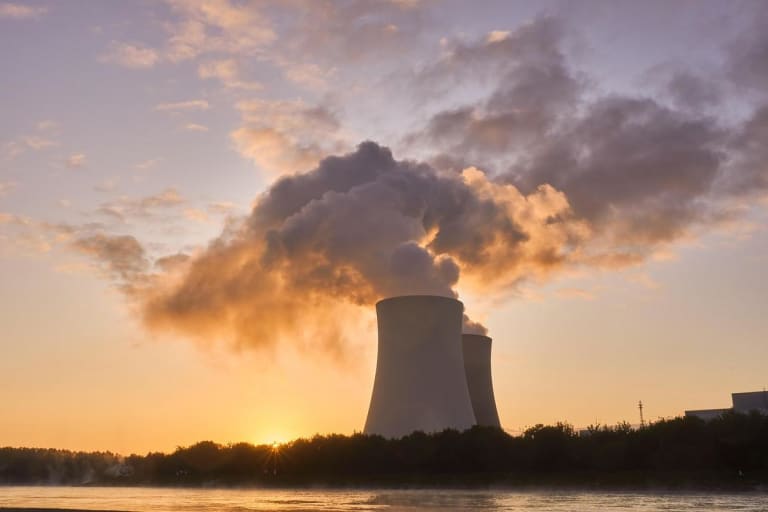
Russian giant Rosatom is exploring the possibility of bringing floating nuclear power plant technology to Brazil, aiming to supply energy to isolated regions of the Amazon and offshore oil extraction units.
The proposal to expand Rosatom’s technological portfolio in Brazil gained momentum during the 51st World Nuclear Association (WNA) Annual Symposium, recently held in London. The Russian company sees floating power plants as a strategic solution to meet continuous energy demand in scenarios where conventional transmission infrastructure is unfeasible or insufficient.
Solutions for Complex Demands
According to Ruan Nunes de Souza, an executive at Rosatom’s Regional Center for Latin America, the technology is currently undergoing technical analysis for various applications in the Brazilian market. The objective is to provide robust and stable energy support for offshore exploration and production plants, which require high reliability, and to bring clean energy to remote communities in the Amazon region, overcoming grid connection bottlenecks.
Global Capital Challenges
The London event, themed “From Ambition to Action,” reinforced that the nuclear energy transition requires a massive influx of capital. Experts warn that the sector will need to attract investments exceeding US$ 250 billion annually by 2035 to meet global installed capacity expansion targets.
Polina Lion, the group’s sustainability director, advocated for a joint effort to unlock new projects:
“The more dialogue there is between nuclear industry professionals, policymakers, universities, financial institutions, and climate experts, the faster we will find practical solutions to triple nuclear capacity. Ultimately, Rosatom’s experience confirms a clear point: global ambitions for nuclear energy cannot be achieved without partnership, mutual trust, and open dialogue.”
The Role of BRICS in Nuclear Energy
The symposium also highlighted the relevance of the BRICS bloc in the current geopolitical energy landscape. With more than 70% of nuclear plants under construction located in member countries, technical cooperation among the group’s nations is seen as a driver for the development of local programs.
Elsie Pule, coordinator of the BRICS Nuclear Energy Platform, emphasized that the technological disparity among member countries actually acts as a catalyst for industrial exchange.
Brazil, which participates in the platform through ABDAN and NBEPar, seeks to integrate into this international dynamic of knowledge and technology sharing, aiming to consolidate the role of nuclear energy in its power generation matrix for the coming decades.