Rio Grande do Norte is betting on its massive surplus of clean electricity to attract major data centers and industries, turning transmission bottlenecks into new economic opportunities.
The energy transition in the country is entering a new strategic chapter in Northeast Brazil. Rio Grande do Norte currently manages an impressive volume of clean electricity, producing up to ten times the amount consumed internally. However, this abundance generated by wind and solar farms runs up against grid capacity limits and a shortage of large local consumers.
To overcome this mismatch, industrial leaders and sector experts are drafting plans to attract energy-intensive industries. The main goal is to convert the productive surplus into regional economic development, establishing the state as a technological and sustainable hub.
The Potential for Installing Data Centers
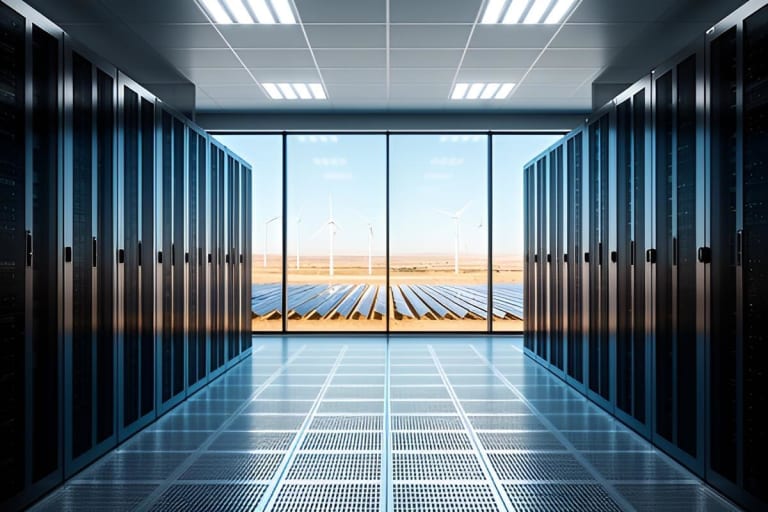
Among the most promising alternatives to absorb this surplus load is the data center sector. Driven by advancements in artificial intelligence and cloud computing, these operations seek regions with an abundant supply of clean energy and advanced connectivity.
FIERN President Roberto Serquiz points out that this competitive advantage is already a concrete reality for investors interested in the region.
This energy availability, with a generation capacity ten times greater than consumption, is not just a perspective to be transformed into an energy advantage: it is already an advantage. Now we are entering the phase of attracting energy consumers, providing them with greater security in this factor and generating solid legal certainty.
The proximity to submarine fiber-optic cables arriving along the northeastern coast reinforces the territory’s logistical attractiveness. However, making these projects viable requires rigorous planning in the expansion of substations and transmission lines to ensure the operational stability demanded by these companies.
Operational Challenges and the Impact of Curtailment
The rapid pace of renewable energy installations has generated a side effect known as curtailment, which consists of the forced curtailment of generation due to a lack of immediate demand on the grid. This scenario highlights the urgent need to connect new industrial consumers to balance the state’s electrical system.
For Crea-RN President Roberto Wagner, the central challenge lies in bringing supply closer to actual demand.
Today we have a lot of energy; Rio Grande do Norte suffers from curtailment, which is the cutting of generation due to a lack of loads connected to generation. There is a mismatch between generation and loads.
In addition to the arrival of new industries, the use of battery energy storage systems emerges as an indispensable tool. These technologies make it possible to retain the surplus generated during peak solar and wind hours, injecting electricity back into the grid as market demand requires.
The advancement of these technologies also requires the technical training of the local workforce, opening up space for specialists in automation, security, and advanced electrical system management. Crucial debates on these topics will take place in Natal during the Energy Storage Brasil and Data Center Conference 2026 events, promoted by Grupo FRG Mídias & Eventos, bringing together investors and tech developers.
Rio Grande do Norte’s economic future will depend on its ability to align the expansion of transmission networks with the arrival of new corporate investments. By connecting clean generation, efficient storage, and large consumption centers, the state is moving toward solidifying its leadership role in the national green economy.