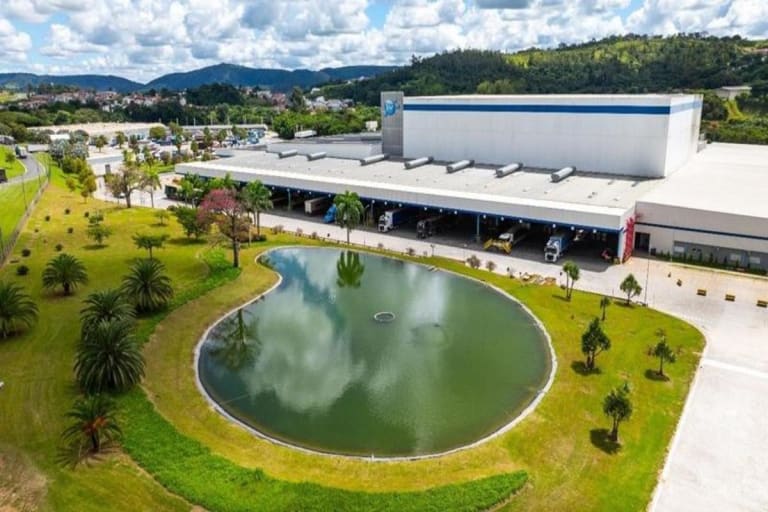
Government split delays decision on low-emission sources for data centers, with natural gas at the center of the debate.
The signing of the law establishing the Special Taxation Regime for Data Center Services (Redata), which the sector has awaited for over a year, has sparked internal controversy within the federal government.
The regulation of this new tax incentive policy, aimed at attracting billions in investments for the construction of data processing centers, left the definition of what constitutes a low-emission source open, leading to an impasse between different ministries and highlighting a dispute over the inclusion of natural gas.
The Supplementary Law and the implementing decree, signed on September 15, were celebrated by a market that had been eagerly anticipating this definition.
However, the lack of a clear consensus on the role of natural gas—a fossil fuel—as a low-emission source to power the eligible data centers has become the primary point of friction.
Expectations are now centered on an interministerial ordinance that will complement the regulation, but the delay is already causing concern among investors.
Dispute at the Planalto Palace: Natural Gas in the Spotlight
The core of the disagreement lies in the opposition between the Ministry of Mines and Energy (MME) and the Ministries of Finance and Development, Industry, Trade, and Services (MDIC).
While the MME, aligned with the proposal defended by the Senate, argues that natural gas should be classified as a low-emission source, citing its international recognition as a transition fuel, the Finance Ministry and the MDIC remain resistant.
These ministries fear that the inclusion of fossil fuels could contradict sustainability goals and undermine the approximately R$ 7.2 billion in tax benefits provided by Redata.
Rafael Dubeux, a special advisor to the Minister of Finance, confirmed that the debate over the scope of the term low-carbon is ongoing within the government.
Various approaches are being considered, ranging from the total exclusion of natural gas to its conditional acceptance.
Among the alternatives under discussion are permitting its use as backup in the event of power outages, requiring offsetting mechanisms such as carbon credits, the use of biomethane, or carbon capture and storage (CCS) technologies.
Market Seeks Clarity and Speed
For industry associations, clarity and speed in finalizing the regulations are crucial.
According to these representatives, natural gas provides the energy reliability required for data centers, which operate 24 hours a day, seven days a week.
Currently, even with the procurement of renewable energy, many projects utilize diesel backup systems, which already raises questions regarding sustainability.
The Minister of Mines and Energy, Alexandre Silveira, reinforced his ministry’s position, highlighting the need to include natural gas in the regulation to ensure the program’s attractiveness for large data processing centers.
He emphasized the role of gas as a transition fuel with a low carbon impact.
Despite the MME‘s advocacy, the ministry’s view clashes with the sustainable taxonomy policy established by the government in October 2025.
The current decree sets limits on the use of fossil fuels in projects labeled as sustainable, allowing for the blending of natural gas with biomass or biogas up to 50% by 2029, with a gradual reduction until 2044.
For projects using natural gas exclusively, eligibility is permitted until 2035, but is conditioned upon carbon capture systems and lifecycle project emissions not exceeding 70 gCO₂/kWh.
The final decision on natural gas under Redata will determine the future of significant investments in Brazil’s data center sector.