
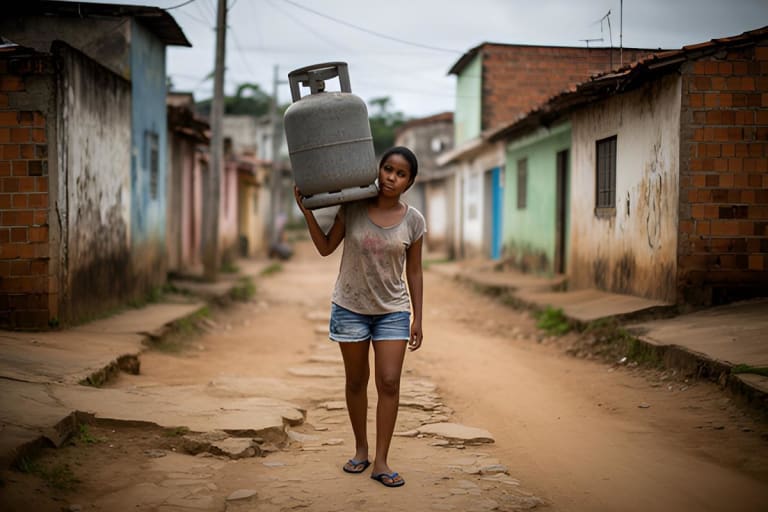
A recent survey conducted by Agenda Pública shows that logistics for obtaining GLP is among the main obstacles faced by the Gás do Povo program.
The government initiative, aimed at mitigating energy poverty across the country, has transformed the daily lives of thousands of low‑income households. However, operational and practical barriers still limit the full effectiveness of the public policy designed to improve access to cooking gas.
The detailed study sought to understand the impacts of the current model through discussions with residents of São Paulo and Belém, and with the help of specialists, authorized distributors, and representatives from the Ministry of Development and Social Assistance, Family and Hunger Fight, together with the Energy Research Company.
Key Logistical and Technological Challenges
Among the obstacles identified, the requirement for in‑person pickup of the supply and the weight of the container cause significant inconvenience. Factors such as limited mobility of citizens and the lack of home‑delivery options make the journey complex, requiring physical effort and additional transportation costs.
Additionally, digital technology barriers affect the initial part of the process. App validations, password recovery, and the need for constant registration updates create friction points for families in vulnerable situations.
Questions about the benefit’s expiration date and the equivalence of fuel brands were also documented. Many users report uncertainty about the periodicity rules, which raises concerns about losing the subsidy and lower satisfaction when the product differs from their usual preference.
Positive Impacts and Comparison with Previous Models
Despite operational setbacks, the measure’s reception remains largely favorable. About 70% of participants see significant improvements in their daily lives, highlighting the financial relief provided by the free essential item.
On the other hand, beneficiaries who previously received the old in-kind subsidy report that the financial modality offered greater flexibility. The study also identified isolated cases of reselling the item to obtain food supplies, highlighting severe food vulnerability situations that require stronger coordination with social support networks.
To optimize the results of the strategy implemented by President Luiz Inácio Lula da Silva‘s administration, the report recommends adopting simplified service channels, flexible delivery alternatives, and greater synergy with food assistance and safety guidelines.