
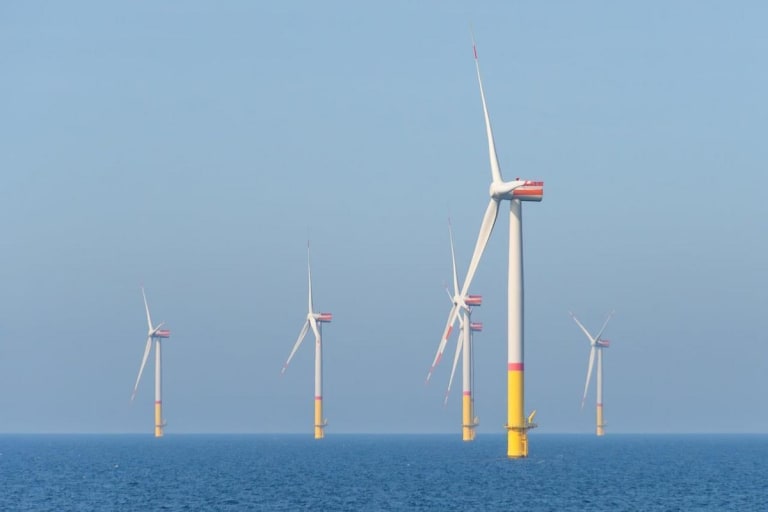
The PNE 2055 projects that Brazil will achieve more than 80% of its energy matrix from clean sources, boosting the energy transition and sustainability in the country.
The Ministry of Mines and Energy (MME) officially published the eagerly awaited National Energy Plan 2055 in the Official Gazette of the Union.
The strategic document, developed in technical collaboration with the Energy Research Office (EPE), establishes long-term guidelines for the planning of the electric power and fuel sectors over the coming decades, charting a solid path toward the decarbonization of the national economy.
Updated every five years, the strategic planning serves as a compass for investors, regulators, and public managers.
The new edition consolidates Brazil‘s prominent position in the global clean energy landscape, projecting a scenario where the share of renewable sources will surpass the significant milestone of 80% by the end of the planned horizon, highlighting supply security and economic viability.
The Strategic Role of EPE in Long-Term Planning
The drafting of the PNE 2055 required complex energy security studies and advanced macroeconomic modeling conducted by EPE technicians.
The joint work with the MME mapped global trends in technological innovation, transport electrification, and generation decentralization, ensuring that the Brazilian power sector is prepared to meet growing demand in a sustainable and competitive manner.
EPE experts stated:
The new plan consolidates Brazil’s historical vocation for renewable energy, pointing to secure pathways for infrastructure expansion and the attraction of green investments in the coming decades.
Perspectives for the National Energy Matrix
With the consolidation of these long-term goals, Brazil reaffirms its commitment to international climate agreements.
The advancement of distributed generation, the expansion of wind and solar farms, as well as low-emission hydrogen, are fundamental pillars highlighted in the official document released by the MME.
The impact of the PNE 2055 transcends technical planning, serving as a basis for the formulation of public policies aimed at sustainability.
In the coming years, joint efforts between the government and the private sector will be directed toward enabling energy auctions and the modernization of transmission grids, ensuring that the projection of 80% renewables becomes a palpable reality for Brazilian consumers.
RELATED NEWS
 Spain, Portugal, and Luxembourg Demand 2040 Renewable Energy Target for European Union
READ MORE
Spain, Portugal, and Luxembourg Demand 2040 Renewable Energy Target for European Union
READ MORE
 Vitru Educação Slashes Energy Costs by 40% Through Free Market Access and Efficient Equipment
READ MORE
Vitru Educação Slashes Energy Costs by 40% Through Free Market Access and Efficient Equipment
READ MORE
 Synergy Between Biomethane and Natural Gas Accelerates Energy Transition and Decarbonization in Brazil
READ MORE
Synergy Between Biomethane and Natural Gas Accelerates Energy Transition and Decarbonization in Brazil
READ MORE