
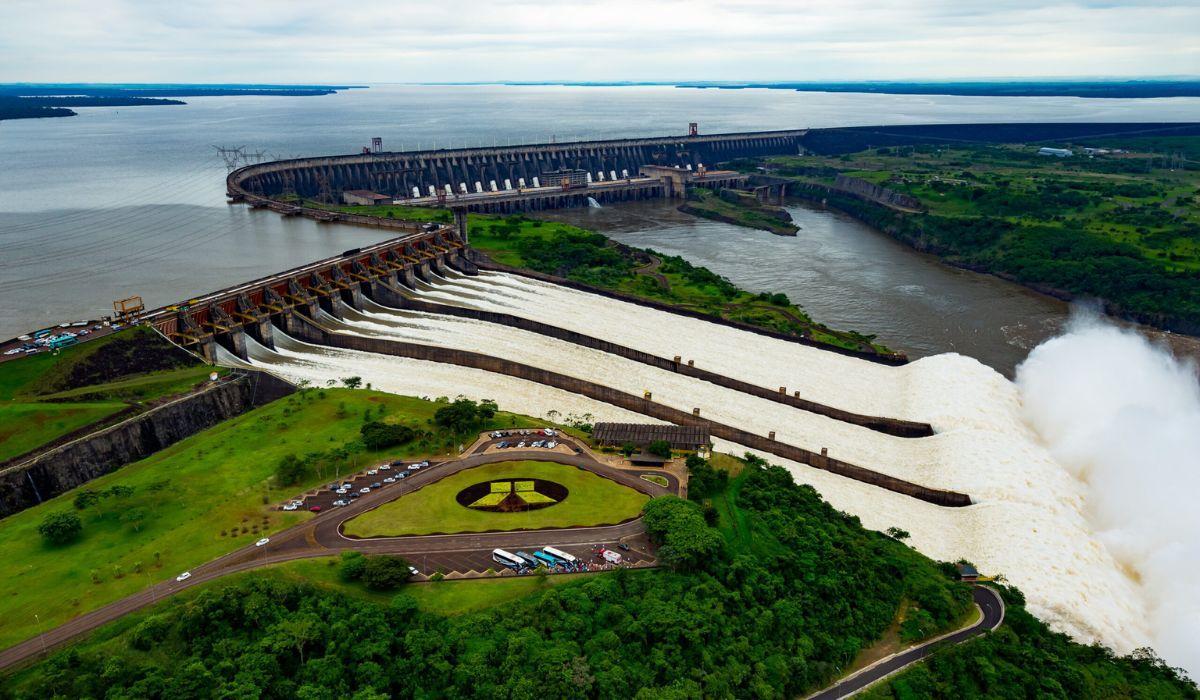
Paraguay Raises Itaipu Consumption, Reducing Brazil’s Share and Potentially Raising Energy Costs.
The increase in Paraguay’s demand for power generated by the Itaipu hydroelectric plant, especially during peak hours, is expected to affect the availability of electricity for Brazil. A recent study indicates that this shift, projected to intensify from 2027 onward, could lead to greater reliance on thermal power plants, putting upward pressure on electricity prices through 2029.
The National Electricity Administration (Ande), Paraguay’s state utility, projects a rise in its peak demand from 4 GW in 2026 to 4.7 GW in 2029. This increase comes at a critical time for Brazil’s National Interconnected System (SIN), which already faces high afternoon demand.
Reduced availability of Itaipu power may force the use of thermal plants, known for higher operating costs, which in turn tends to raise marginal electricity prices.
The Energy Balance of Itaipu Under a New Perspective
The Itaipu plant, split evenly between Brazil and Paraguay in its output, has historically operated with Paraguay consuming a smaller share of its quota and selling the surplus to Brazil. However, this dynamic has been changing significantly.
From 2023 to 2025, Paraguay’s demand has already shown substantial annual growth, partly driven by the expansion of activities such as cryptocurrency mining and data centers, which require continuous and robust power supply.
This growth in Paraguayan consumption directly reduces the amount of excess Itaipu energy that Brazil can acquire. The problem worsens when this high demand coincides with Brazil’s peak hours, especially between April and September.
Analysts Fillipe Andrade, Lucas Guimarães and Lorena Fernandez from Itaú BBA stated:
Ande’s demand at this time could reach 4.7 GW in 2029, representing roughly 700 megawatts more than the 2026 projection.
The concern is not about a disruption of Brazilian supply, but the need to turn to more expensive generation sources.
Cost Projections and Impacts on Distributors
The Itaú BBA study estimates an increase in thermal generation between 2027 and 2029, with an annual growth of about 11%. This rise in reliance on thermal plants, coupled with a reduced supply of hydroelectric power from Itaipu, is expected to pressure marginal electricity prices.
Projections indicate an increase in the average marginal price from R$ 40 to R$ 59 per megawatt‑hour (MWh), although it is important to note that this figure does not directly reflect the final price paid by residential consumers.
The change in Itaipu‘s energy availability also raises a warning for Brazilian distributors. The Brazilian Association of Electric Energy Distributors (Abradee) expressed concern that companies may start 2027 with supply contracts below their needs.
The reduction in Itaipu quotas could reach 32.3% in certain scenarios, according to the association’s calculations.
The association requested an early definition of the portion allocated to Ande and greater flexibility to adjust contracts. This issue becomes even more relevant in light of the A-1, A-2, and A-3 Existing Energy Auctions, scheduled for November 2026, where contracts for supply starting in 2027 will be set.
Clear visibility of the Itaipu energy available for contracting is essential for Brazil’s energy planning in the coming years.