
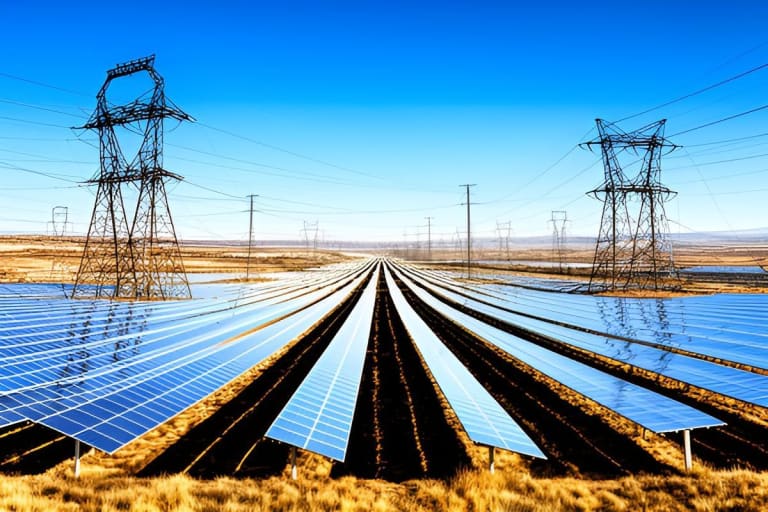
The ONS issued a medium-probability alert for an energy surplus this Sunday. Understand how power grid management impacts solar energy producers and consumers.
The Brazilian power system faces a period of heightened attention this Sunday, October 4. The National Power System Operator (ONS) classified as medium the probability of triggering its Surplus Management Plan, a technical measure required when energy supply exceeds the grid’s capacity to safely absorb it.
For those using solar panels, the news raises immediate questions regarding equipment operation and the integrity of energy credits. However, it is essential to clarify that the operational alert does not represent a general shutdown order, but rather strategic monitoring to ensure the stability of the National Interconnected System.
What the surplus risk means
The phenomenon, technically known as curtailment, occurs when renewable generation, such as solar power, exceeds demand during low-consumption periods typical of weekends. To prevent overloads that could compromise infrastructure, the ONS may apply temporary restrictions.
A medium probability does not equal a confirmed activation; the operator maintains constant monitoring of supply and demand, evaluating in real time whether curtailment measures are strictly necessary for system reliability.
Real impact on electricity bills and investments
It is important to distinguish between generation profiles. Residential consumers using power for self-consumption and net metering via ANEEL have contractual rules that differ from large solar farms. Monthly bills follow net metering system criteria, and there is no automatic cancellation of credits due to an operational risk advisory.
For investors in larger power plants, the situation requires closer monitoring. Potential restrictions can directly impact revenue, depending on the connection point and project location. Therefore, feasibility analyses for new projects must consider the region’s curtailment history and local grid technical constraints.
How to proceed amidst uncertainties
The clean and sustainable energy market matures as the system faces these integration challenges. The recommendation for photovoltaic system owners is not to confuse national forecasts with actual losses. Should consumers identify unusual variations in generation or billing, they should cross-check inverter data with information provided by the utility.
Brazil’s energy transition is moving toward a model where strategic location and energy storage will be as relevant as panel capacity. Staying informed through official ONS bulletins is the best way to distinguish between a preventive operational safety measure and an actual technical adjustment to your generation.
RELATED NEWS
 Petrobras and BP Partnership Cancels Solar Park in Rio Grande do Norte Due to Power Curtailment
READ MORE
Petrobras and BP Partnership Cancels Solar Park in Rio Grande do Norte Due to Power Curtailment
READ MORE
 Reduction in energy curtailment impacts battery returns in Brazil’s Capacity Reserve Auction
READ MORE
Reduction in energy curtailment impacts battery returns in Brazil’s Capacity Reserve Auction
READ MORE
 Natural Gas and Battery Impasse Challenges Data Center Regulations and Energy Auctions
READ MORE
Natural Gas and Battery Impasse Challenges Data Center Regulations and Energy Auctions
READ MORE