

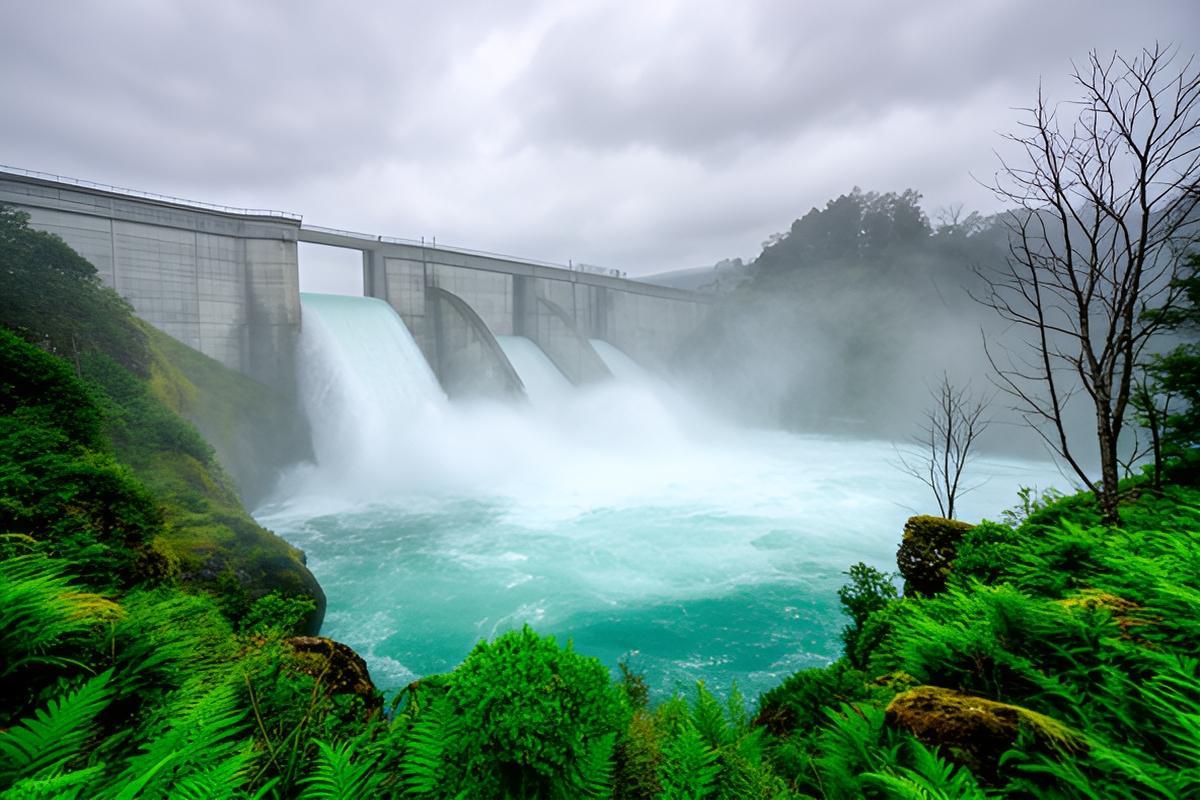
The ONS foresees the need to activate thermal plants and manage excess water in the SIN, even with above‑average rainfall in November.
The Brazilian electric sector has been experiencing a climate and operational duality in recent weeks. While rains have significantly increased reservoir volumes across various regions, the high demand for electricity imposes severe logistical challenges for national grid managers.
This dynamic was detailed by the ONS during the presentation of the PMO. The monthly plan highlighted the need to balance generation surpluses with consumption peaks that set consecutive historical records across Brazil during the period.
Favorable Hydrology and Above‑Average Rainfall
November ends with very positive prospects for hydroelectric generation. The ENA is expected to close the period at 162% of the MLT in the SIN, maintaining the robust pace seen in previous months.
The positive highlight is concentrated in the South region, with inflows estimated at an impressive 301% of the historical average. The Southeast and Central‑West subsystems finish the month with a striking 149% of the MLT.
As a direct reflection of this scenario, the global storage of the SIN reservoirs is projected to reach 59% by month’s end. The South subsystem leads with a surplus, hitting 91% of its total water retention capacity.
Thermal Dispatch and Peak Management
Despite abundant water, the ONS indicated the necessity to rely on complementary sources. Thermal plants will need to be activated to ensure secure supply during the grid’s peak demand periods.
The operational strategy also includes maximizing the output of hydroelectric plants in the Tocantins River basin. The Tucuruí and Serra da Mesa plants will increase generation during critical moments.
According to the regulatory body, the measure aims to preserve the strategic levels of local reservoirs. Integrated management seeks to ensure full service during peak consumption times without compromising future safety, the technicians say.
Integrated management seeks to ensure full service during peak consumption times without compromising future safety.
Surpluses and Demand Response
During periods of low grid demand, the system flips entirely. The network will experience EVT episodes, creating room to export excess electricity to neighboring countries.
To alleviate load stress, the operator deployed flexible market tools. The demand response program triggered significant consumption reductions on consecutive days, reaching up to 60 MW.
At the same time, Brazil turned to commercial energy imports from Argentina and Uruguay. This strategic measure reinforced supply security during specific high‑demand windows.
The progress in operating the SIN demonstrates the technical complexity required by the current energy mix. With strong participation from renewable sources, coordinated management will continue to set the sector’s pace in the coming months.
RELATED NEWS
 CEE opens registration for webinar on the evolution of financial settlement models and operationalization of financial guarantees
READ MORE
 Director of ONS, President of EPE, and Graça Foster Discuss the Future of the Energy Transition in Rio de Janeiro
READ MORE
 BMW iX3 2027 Demonstrates Over 1,000 km Range on a Single Charge in Brazil
READ MORE