
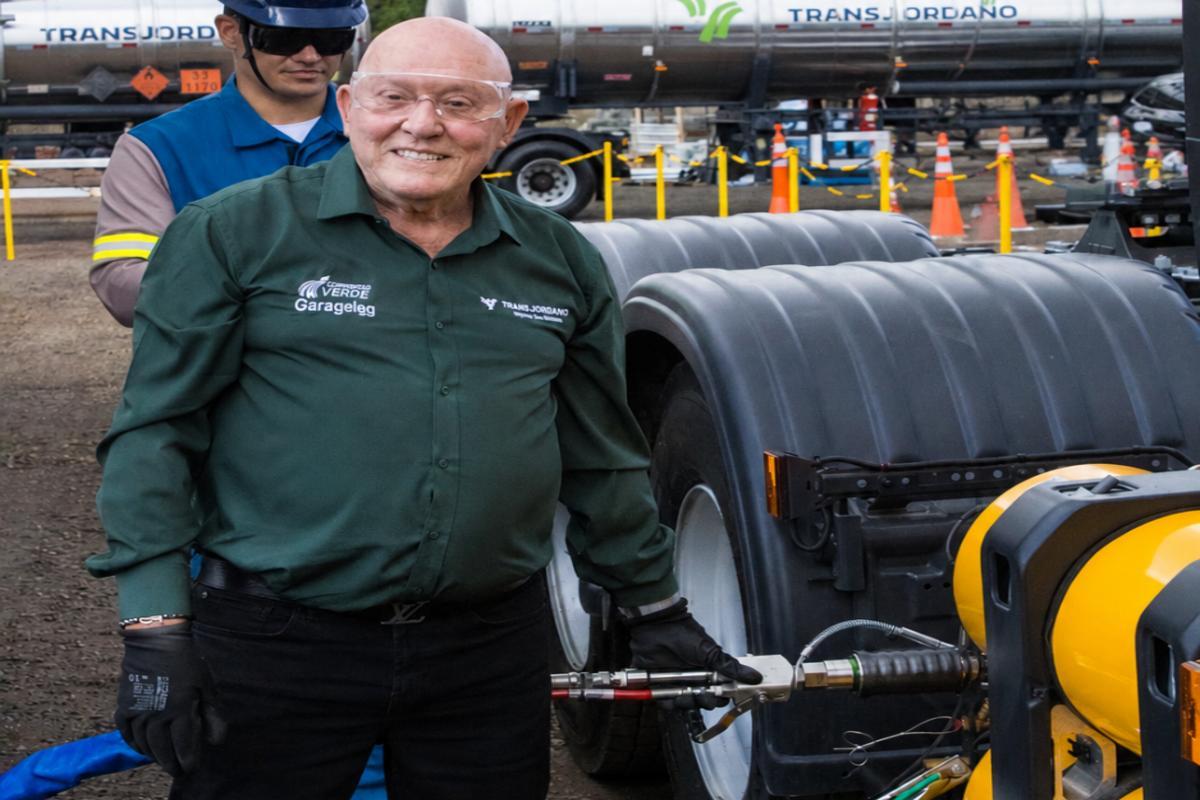
New technology allows trucks to be fueled with biomethane in up to 10 minutes, combining high speed, lower electrical power, and an annual reduction of 6,400 tons of CO₂ in sustainable freight transportation.
The energy transition in road freight transportation demands solutions that reconcile greenhouse gas emission reductions with operational productivity. In this scenario, Ultragaz introduced a technology capable of refueling biomethane-powered trucks in approximately 8 to 10 minutes during an event promoted by TransJordano on October 7 in Sumaré (São Paulo), marking the start of operations for the Green Corridor.
The project establishes a refueling axis of about 450 kilometers between Ribeirão Preto, Sumaré, and Cubatão, connecting to the Port of Santos region, and plans to utilize 100 trucks powered by the renewable fuel by December 2026. The infrastructure will be operated by GarageLog, a company belonging to the TransJordano Group, and will also be available to other carriers.
According to Erik Trencht, Director of Renewable Gases at Ultragaz, the adopted solution features relevant differentials compared to certain conventional compression configurations. During his presentation, the executive explained that benchmark systems can require installed electrical power between 300 and 400 kVA and refueling times of 20 to 40 minutes. In the configuration implemented along the Green Corridor, the installed power is on the order of 40 kVA, and refueling can be completed in approximately 8 to 10 minutes.
“The partnership enters the market with a very efficient solution, combining speed, low installed power, and operational efficiency.”
Growth of Biomethane and Logistics Sustainability
The innovation is part of a market showing strong growth prospects in Brazil. According to the Brazilian Biogas and Biomethane Association (ABiogás), national biomethane production grew by approximately 75% in 2025, reaching 1.06 million cubic meters per day. Produced from the purification of biogas derived from organic waste, the renewable fuel represents an alternative to reduce the use of fossil sources in clean energy. In a study released in 2025, the Energy Research Office (EPE) pointed out that the economically viable potential of agricultural-origin biomethane could equal one-third of the national consumption of gasoline and diesel.
For Joyce Bessa, ESG and Institutional Relations Director at TransJordano, the Green Corridor represents the transformation of environmental commitments into a structured operation. During the event, the executive presented the expected results from the full integration of the new fleet, which is expected to cover approximately 5.5 million kilometers per year using biomethane.
“In the Green Corridor, that is 6,486 tons of CO₂. I know that number is very large to keep in mind, so I put it up big so nobody forgets. This is the estimated amount we will avoid emitting per year.”
The director also highlighted that the environmental benefits can directly reach companies that contract TransJordano services. Since freight transportation is part of Scope 3 for many shippers, the use of renewable fuel helps these organizations track their environmental commitments.
“Your product can reach its destination with fewer emissions and with a cargo emissions report. We will be able to deliver reports showing how much CO₂ you avoided emitting.”
With refueling stations planned for Sumaré, Ribeirão Preto, and Cubatão, the Green Corridor seeks to demonstrate how integration among clean energy suppliers, vehicle manufacturers, and carriers can expand the use of biomethane in the country. The solution presented by Ultragaz adds an important operational component by reducing downtime and the need for electrical power. For TransJordano, the investment represents a solid opportunity to advance the decarbonization of its activities and drive sustainability in the Brazilian logistics sector over the coming years.