
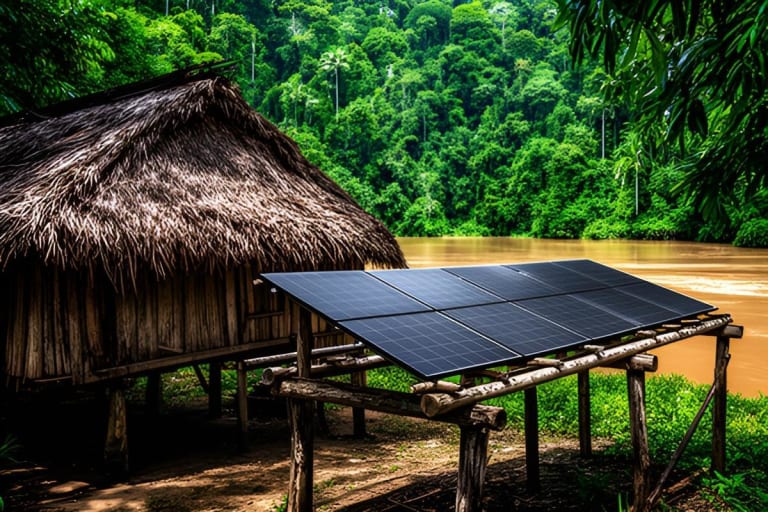
The Ministry of Mines and Energy opened a public consultation proposing 30% renewable energy in the 2027 isolated systems auction, aiming to serve 482,000 people in the Amazon with less diesel dependence.
The Ministry of Mines and Energy (MME) has taken an important step toward the energy transition in the country’s most remote areas. The ministry opened a public consultation regarding the electricity supply auction for isolated systems, scheduled for 2027.
The main novelty in the draft under discussion is the requirement that at least 30% of the energy generated by the projects come from clean sources. This measure has the potential to directly impact the infrastructure of the Legal Amazon in the coming years.
The plan covers about 482,000 residents spread across 31 localities in the states of Amazonas, Pará, Roraima, Rondônia and Acre. These regions largely depend on diesel oil to maintain continuous supply.
Rules under discussion and the impact on the regional mix
Currently, electricity generation in isolated communities faces high costs from fossil fuels, which are shared by all Brazilian consumers through sectoral charges. The introduction of solar power with battery storage seeks to smooth these expenses and reduce emissions.
However, the proposed index is not a final rule. It is a public consultation text that receives contributions from citizens and companies until November 17, and may be altered until the final draft of the notice.
Detailed planning of the structures is carried out in partnership with the Energy Research Company (EPE), ensuring the technical analysis of each of the eight lots in the bidding process.
The 30% renewable percentage refers to the composition of energy generated by the contracted projects, requiring robust technical solutions to ensure the continuity of local supply.
Difference between local supply and residential energy
It is crucial to highlight that the auction involves contracting plants for the community’s overall system, not the distribution of solar panels on residential rooftops. Home installation programs follow distinct operational guidelines.
In addition, the inclusion of clean sources does not mean the immediate shutdown of diesel generators. Fossil fuel will continue to serve as a supply guarantee during periods of high demand or low solar radiation.
Grid stability depends on the autonomy of battery banks and regional logistics. Residents experiencing service fluctuations should keep a record of service requests with their local distributor.
Next Steps and Expectations for the Sector
The initiative signals progress toward sustainability and operational efficiency in hard‑to‑reach areas. However, practical benefits hinge on the completion of auction, certification, and construction phases.
The final list of cities included will be confirmed only after the public consultation phase ends and the federal government publishes the official final documents.
Until then, consumers and market participants are monitoring developments to assess technical requirements and investment opportunities in the Northern region.