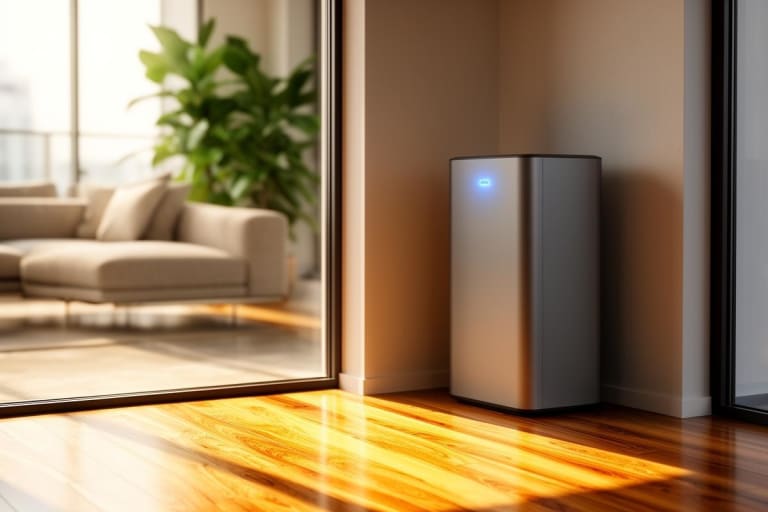
The new AquaVolt plug-in battery system, unveiled by Dyness, promises to bring residential energy storage technology to homes and apartments without solar panels.
The energy transition in Brazil has reached a more inclusive milestone. Traditionally linked to large photovoltaic installations, residential battery energy storage has just broken the barrier of requiring solar roofs with the arrival of the AquaVolt. This new product, revealed during Intersolar South America 2026, suggests a paradigm shift: allowing everyday consumers to use the conventional power grid to charge a high-performance power bank, ensuring a supply during moments of grid instability.
This innovation primarily targets residents of apartments or properties lacking space for solar panels who are seeking a robust alternative against power outages. With a nominal capacity of 5.12 kWh and Lithium Iron Phosphate (LiFePO4) cell technology, the device offers a stable and long-lasting alternative for managing essential loads, acting as insurance against unexpected blackouts.
Technology and Backup Performance
The equipment’s standout features are its versatility and response speed. According to Dyness, the system can switch to backup mode in just 10 milliseconds, preventing sensitive equipment, such as modems and computers, from shutting down during a power interruption.
“Residential storage gains versatility by detaching itself from the requirement of a photovoltaic system, allowing any household with an unstable power grid to have a reliable backup solution for electronics and essential loads.”
Planning is Key
Although the system offers autonomy, caution is required during sizing. A capacity of 5.12 kWh does not equal infinite energy. The actual backup duration depends directly on the user’s consumption profile: while a router and LED lighting can be powered for many hours, high-consumption appliances, such as electric showers or air conditioners, would deplete the charge quickly.
Experts warn that the success of this investment requires rigorous planning. Before purchasing, the user should list the critical items that require power, verify the continuous inverter output—which may be 2.5 kW or 3.6 kW—and ensure that the installation is performed by qualified professionals, adhering to current electrical standards.
The entry of AquaVolt into the national market signals the sector’s maturation. More than just a tool for solar energy enthusiasts, smart batteries are now being viewed as an essential piece of residential infrastructure, adapting to different consumption needs. The future of storage, it seems, will be increasingly flexible and focused on everyday energy resilience.