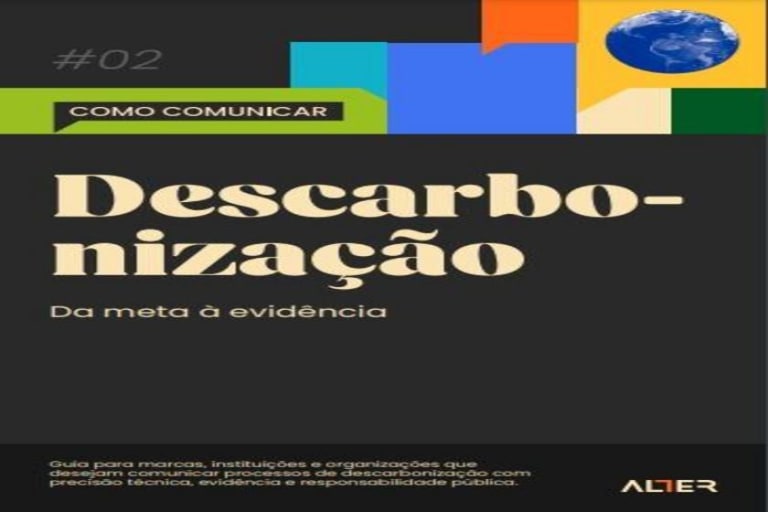
Alter Conteúdo launches a practical guide to assist organizations in communicating decarbonization goals, offering essential strategies to ensure transparency, avoid greenwashing, and align climate narratives with the technical rigor demanded by today’s market.
Communication about climate goals is currently undergoing a period of high complexity. With pressure from regulatory bodies and an increasingly attentive public, companies face the challenge of reporting their energy transition processes without falling into reputational traps. In this scenario, Alter Conteúdo presents the guide ‘How to Communicate Decarbonization: From Goal to Evidence,’ a strategic tool developed in partnership with Future Climate Group to elevate the standard of corporate communication on sustainability.
The launch occurs at a critical moment of distrust. Data indicates that 62% of current consumers suspect brands of practicing greenwashing. In Brazil, although the population keenly feels the effects of climate change, there is still a significant gap in clear information. The material emerges as an antidote to this lack of clarity, offering direction for leaders and impact managers to translate technical complexities into responsible, evidence-based messages.
Technical Transparency and Combating Greenwashing
The guide is structured into nine fundamental chapters, ranging from technical explanations of scopes 1, 2, and 3 emissions to building reputational narratives. The publication cautions against the careful use of terms like ‘carbon neutral’ and ‘decarbonization leader,’ encouraging brands to focus on the precision of their data rather than just vague promises. The content also addresses crisis management, guiding how to account for revised goals or differentiate between absolute emissions and carbon intensity.
As highlighted by Kelly Lima, founding partner of Alter Conteúdo, the sector has matured:
“Communication of causes has matured because it now demands more than just good campaigns or good intentions—and decarbonization is one of the most scrutinized agendas today.”
Alignment with Global Frameworks
To ensure relevance, the material integrates the latest guidelines from international bodies, including the corporate net-zero standard from the SBTi and European Union regulations against generic environmental claims. The intention is for organizations not to appear more advanced than they are, but to know how to honestly communicate the current stage of their journey toward a low-carbon economy.
As reinforced by Laura Albuquerque, Co-CEO of Future Climate:
“The quality of communication doesn’t depend on appearing more advanced than one is, but on accurately describing the real stage the organization is in.”
The guide, which includes a complete technical glossary, is now available for consultation. You can access the full material and deepen your knowledge on the subject through the official website: www.alterconteudo.com.br/publicacoes/como-comunicar-descarbonizacao/.
The future of organizations depends on the ability to align business strategy with climate responsibility. By investing in transparent, fact-based communication, brands not only protect their reputation against accusations of greenwashing but also strengthen engagement with their stakeholders, consolidating their role in building a more sustainable and resilient future.