
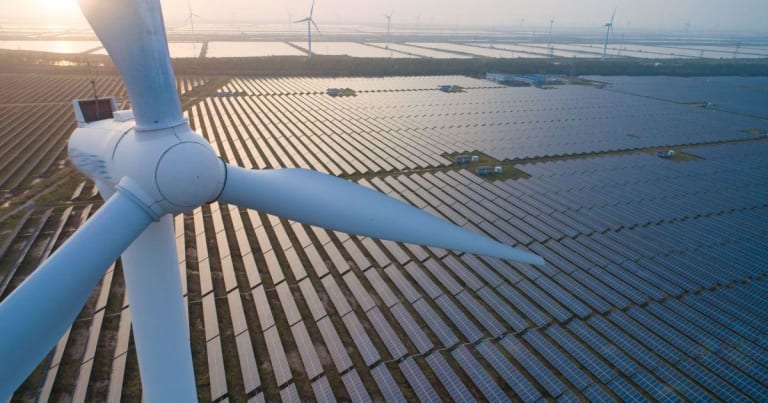
The new National Energy Plan projects a Brazil powered by clean energy, with 80% of its matrix coming from renewable sources and a strong expansion of the energy transition through 2055.
The Ministry of Mines and Energy recently formalized the publication of the eagerly awaited PNE 2055 (National Energy Plan), a strategic document that outlines the future of the country’s power and fuel sectors for the next three decades. Developed in partnership with the Energy Research Office (EPE), the long-term planning establishes ambitious goals to double the total supply of energy inputs nationwide, aligning economic growth with global sustainability targets.
The most striking highlight of the plan is the consolidation of the country as a global benchmark in renewable energy. Official projections indicate that the share of clean sources in the total energy matrix—spanning vital sectors such as transportation, industry, residential, and agriculture—could surpass the 80% mark by mid-century.
Exponential growth of green electricity
In the specific electricity segment, the scenario is even more striking. Electricity demand is expected to multiply more than fourfold over the next three decades. To meet this need without compromising the environment, national electricity generation has the potential to reach an impressive 99% renewable base, driven primarily by the continuous advancement of solar energy and wind energy.
To support this matrix revolution, grid infrastructure will need to keep pace. The planning indicates that the power transmission network could triple in size, both in line extension and transformation capacity, ensuring that generated electricity reaches consumer centers safely.
Efficiency and new fuels
In addition to expanding generation, PNE 2055 places a strong bet on consumption intelligence. Energy efficiency guidelines estimate that conservation measures could avoid more than 25% of final energy consumption by the end of the period, optimizing industrial processes and residential usage.
In the transportation and industrial sectors, biofuels take center stage, with production projected to multiply up to five times. At the same time, natural gas will maintain a crucial strategic role, acting as a flexibility and security element for the Brazilian power system during peak demand.
The publication of the National Energy Plan reinforces Brazil‘s commitment to a low-carbon future. By reviewing its targets every five years with a 30-year horizon, the Brazilian government is creating a secure environment to attract billions in investments for clean technologies, consolidating a modern, resilient economy prepared for global climate challenges.
RELATED NEWS
 Elea CEO defends renewable energy at Redata as Brazil’s competitive edge
READ MORE
Elea CEO defends renewable energy at Redata as Brazil’s competitive edge
READ MORE
 Brazil’s Ministry of Mines and Energy updates rules for Paraguayan electricity imports in the free market
READ MORE
Brazil’s Ministry of Mines and Energy updates rules for Paraguayan electricity imports in the free market
READ MORE
 Five Research Projects Receive R$ 2.5 Million to Turn Climate Data into Economic Decisions in Brazil
READ MORE
Five Research Projects Receive R$ 2.5 Million to Turn Climate Data into Economic Decisions in Brazil
READ MORE