
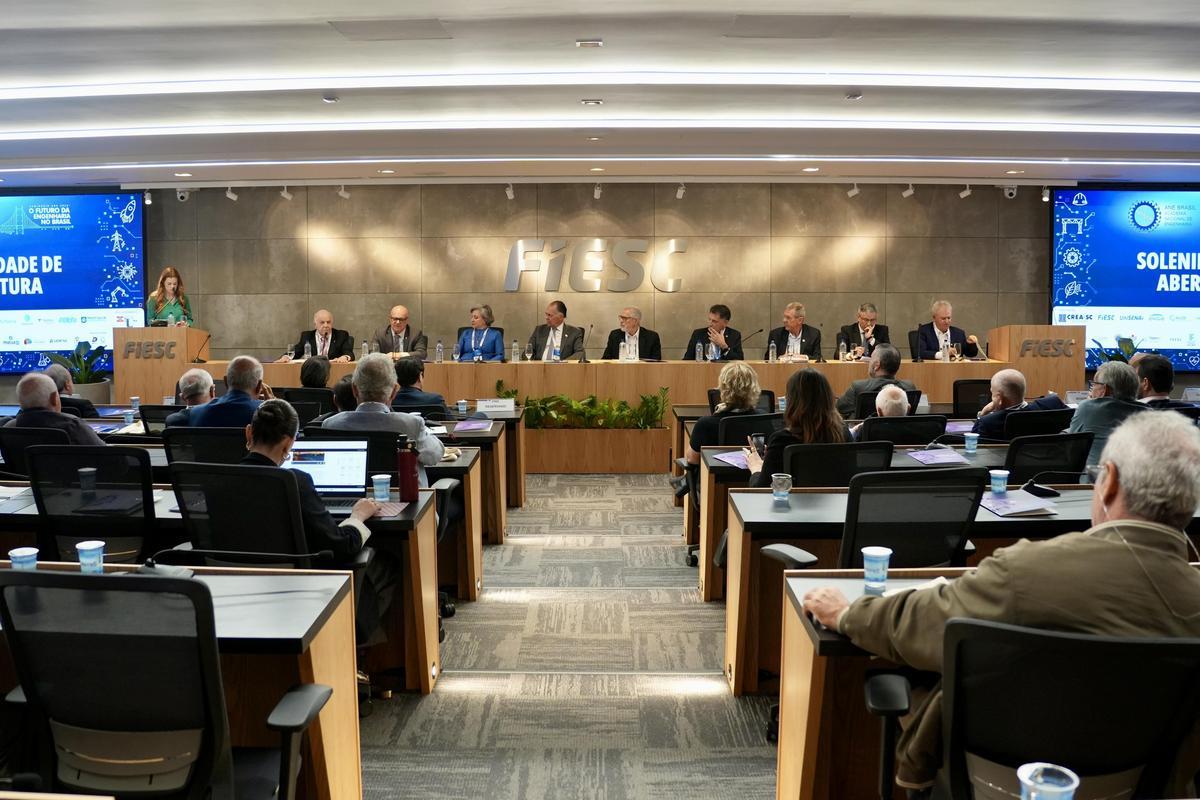
The National Academy of Engineering is developing strategic guidelines to transform professional training in Brazil. The goal is to meet the demands of essential sectors such as the energy transition and technology, strengthening Brazil’s industrial sovereignty.
The National Academy of Engineering (ANE) has taken a decisive step toward the future of Brazilian industry by initiating the creation of a set of strategic guidelines focused on technology education. With a focus on the next decade, the institution aims to modernize the training of engineers, ensuring the country is prepared for global challenges in productivity and innovation.
The starting point for this movement takes place in Florianópolis, during the ANE 2026 Seminar, held at the headquarters of FIESC. The event brings together brilliant minds from academia, the productive sector, and public administration to discuss structural bottlenecks, with a special emphasis on integrating university education with real market needs in a rapidly transforming technological landscape.
Engineering for a Low‑Carbon Economy
One of the core pillars of this action plan is energy transition and decarbonization. In a world urgently seeking carbon neutrality, technical training in Brazil must be restructured to include advanced competencies in clean energy.
Integration between the industrial sector and academia will be essential for the country to lead in areas such as the sustainable exploitation of strategic minerals, the bioindustry, and the efficiency of our electric grid.
The organization points out:
“The document will consolidate initiatives and priority proposals to address the shortage of highly qualified labor in key sectors of the national economy.”
Technology, AI, and Talent Attraction
Beyond environmental concerns, the ANE highlights the need to intensively incorporate artificial intelligence and robotics into curricula. Modernizing the curriculum is not only about technical advancement but also about retaining students.
Combating dropout in STEM courses is treated as a national urgency to avoid wasting essential talent for the country’s technological sovereignty.
The industrial sector, represented by companies such as ENGIE and Statkraft, which sponsor the event, expects these guidelines to serve as a compass for public policy. Aligning foundational training with global technological frontiers is seen as the sole path to ensuring Brazil’s competitiveness on the international stage.
A Future Shaped by Integration
The delivery of the final report, scheduled for the months following the seminar, will mark the beginning of a new phase for engineering education in Brazil. The expectation is that funding agencies and ministries will use these recommendations to drive deep reforms that connect the classroom to the demands of sustainability and innovation.
By fostering this dialogue, the National Academy of Engineering reaffirms its role as a catalyst for progress. Strengthening these educational foundations will be the cornerstone for Brazil to not only participate in the next wave of global development but to lead it, ensuring economic growth balanced with the necessary environmental responsibility.