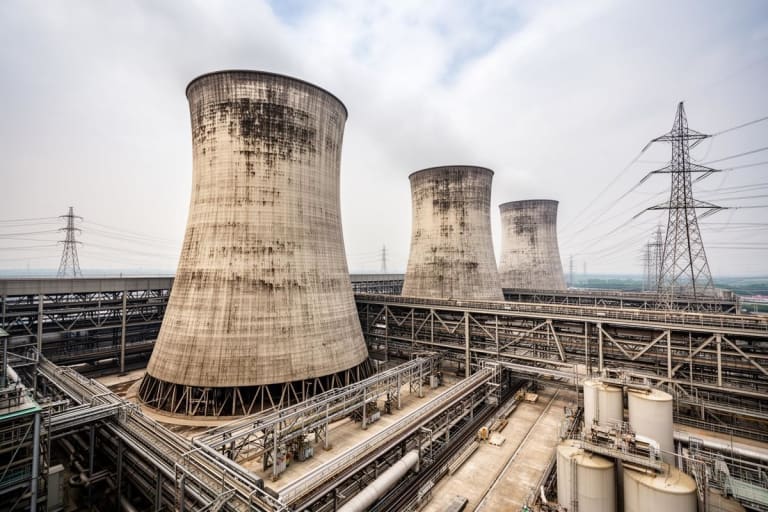
The Ministry of Mines and Energy has officially authorized the implementation of 389 GW in thermal power plants linked to the LRCAP, reinforcing the national energy matrix expansion strategy.
The Brazilian electricity sector saw a significant strategic move this Thursday, September 24. The MME (Ministry of Mines and Energy) published new authorizations in the Federal Official Gazette, enabling the advancement of the implementation of a substantial 389 GW in UTEs (Thermal Power Plants) connected to the LRCAP.
This measure is part of a broader plan to ensure system robustness, especially in a scenario where energy security and operational flexibility gain prominence. The expansion of thermoelectric capacity is seen by experts as an essential pillar for grid balance, functioning as vital support during periods of higher demand or lower availability of variable renewable sources.
The Importance of Thermal Power Plants in the Electricity Matrix
The integration of these new capacities into the LRCAP reflects the government’s commitment to diversifying generation sources. Although the country is rapidly progressing in the transition to clean sources, the role of natural gas and thermal power plants remains fundamental to ensure the reliability of energy supply for the Brazilian market.
The official authorization from the MME is a positive signal for the infrastructure sector, which now has the necessary backing to accelerate execution timelines. The advancement of these projects directly contributes to the goal of ensuring a more resilient supply, capable of facing the climate and consumption challenges the country projects for the coming years.
The flexibility offered by this contingent of power plants will be one of the competitive advantages for the stability of the National Interconnected System (SIN) in the near future.
Next Steps and Sector Expectations
The officialization of these grants paves the way for the companies responsible for the UTEs to begin or continue with the critical licensing and construction phases. With regulatory support secured, the expectation is that these projects will effectively integrate into the electricity sector’s medium and long-term planning, consolidating the LRCAP as a key component in the national energy security strategy. The market is now closely watching the operational timelines of these units and the direct impact they will have on the system’s energy supply.