
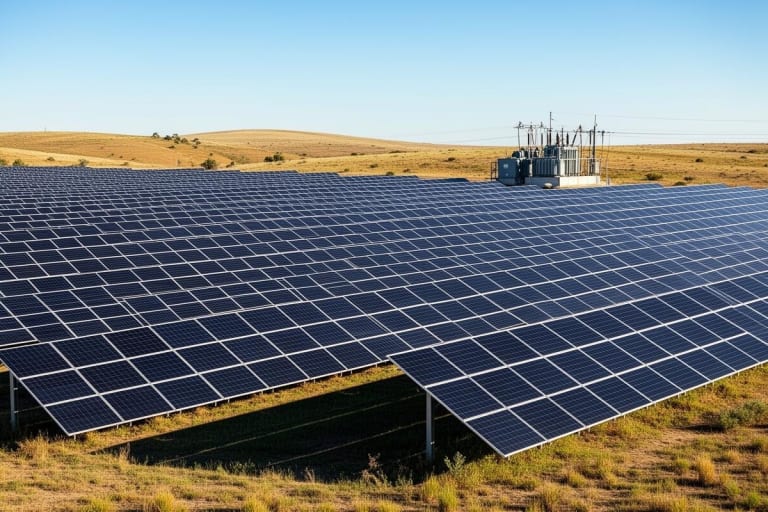
Amidst a financial restructuring, Matrix Energia has sold five distributed generation solar plants to Energisa, consolidating a strategic move in Brazil’s burgeoning clean energy market.
Matrix Energia has confirmed a major transaction in the renewable energy sector, divesting five of its distributed generation (DG) photovoltaic plants to Energisa. The assets, which represent a total installed capacity of 26.75 MWp, mark a significant step both for Energisa’s portfolio and for Matrix’s restructuring strategy, as demand for sustainable energy continues to rise in Brazil. The transaction has already been submitted to the Administrative Council for Economic Defense (CADE) for review to ensure regulatory compliance.
This strategic move stands out in the energy market as it coincides with Matrix Energia’s efforts to optimize its business and financial structure. The sale of these plants aligns with the company’s vision of reducing its exposure to owned assets and transitioning toward an asset-light model, with a primary focus on other areas of solar energy and energy management.
Transaction Details and Strategic Assets
The solar plants involved in the deal—Água Boa, Feliz Natal, Vera, Naviraí, and Nova Mutum—are strategically located in the states of Mato Grosso and Mato Grosso do Sul, regions within the concession area of Grupo Energisa’s distribution companies. The acquisition will be executed by (re)energisa, the group’s division dedicated to innovative energy solutions. (re)energisa already maintains a robust presence in the distributed generation segment, operating 126 solar plants with 473 MWp of installed capacity, solidifying its position as a major player in the expansion of solar energy across the country.
Matrix Energia and the Restructuring Challenge
Matrix Energia’s decision to sell part of its solar assets comes at a time of profound strategic review. The company has hired the consultancy Alvarez & Marsal to assist in re-evaluating its business, with the main objective of reducing its volume of owned assets. By the end of 2025, Matrix’s financial statements indicated a gross debt of R$ 1.15 billion, an increase from the R$ 825.1 million recorded the previous year, underscoring the necessity for restructuring.
Despite the financial challenges, the company’s CEO, Wilson Ferreira Jr., has previously dismissed rumors regarding a potential bankruptcy filing. According to the executive, shareholders Prisma Capital and Duferco injected R$ 200 million into the company between January and February, demonstrating confidence and support for Matrix’s trajectory in the energy market.
The Scenario of Unfinished Transactions
This sale to Energisa comes after a previous attempt by Matrix Energia to carry out a larger operation with Thopen, which was not fully concluded. In October 2025, the companies announced a R$ 556 million agreement involving solar assets totaling 120 MWp. However, that transfer was intended to be phased and depended on the presentation of specific guarantees for the assumption of financing—a requirement that was not fully met by the buyer.
According to Wilson Ferreira Jr., Thopen managed to assume just over 30 MWp of the planned assets, and the remainder of the deal was terminated due to the lack of necessary guarantees. The scenario became even more complex with the bankruptcy filing of the Grupo Pontal-Thopen in August of this year, which declared liabilities of R$ 4.56 billion, highlighting the difficulties faced in previous transactions within the electric sector.
Asset-Light Future and Focus on Solutions
With the completion of the sale to Energisa, Matrix Energia’s portfolio will be adjusted to 16 proprietary solar plants, totaling 67.7 MWp. The company continues to actively seek alternatives for the divestment of its remaining assets, reaffirming its strategy to consolidate an asset-light model in distributed generation that is less capital-intensive and more focused on specialized services.
Matrix stated:
“Matrix continues to evaluate opportunities and alternatives for the sale of its remaining assets, in line with its strategy to consolidate an asset-light model in Distributed Generation. The Company will continue to operate in this segment, offering solutions aimed at the management of third-party plants and the efficient allocation of energy resources.”
The transaction between Matrix Energia and Energisa highlights the dynamics of the clean energy sector in Brazil, where consolidation and restructuring are essential for the advancement of the energy transition. For Energisa, the acquisition strengthens its position as a relevant player in solar energy, expanding its capacity in distributed generation and contributing to the provision of sustainable solutions.
For Matrix Energia, the sale not only aids in financial restructuring but also reinforces its strategic transition toward a more agile business model focused on the management and optimization of third-party energy resources. This scenario reflects the continuous evolution of the energy market, where the pursuit of efficiency and innovation in renewable solutions are pillars for the development of a greener and more sustainable future for Brazil.