United Nations: President Lula reaffirms oil exploration and environmental commitment while criticizing global conflicts and encouraging investment in Brazil.
In his address at the 81st UN General Assembly, President Luiz Inácio Lula da Silva defended Brazil’s strategy of pursuing new oil reserves, with a special focus on the so-called Equatorial Margin, while reaffirming an unwavering commitment to the environmental agenda. The speech, delivered in New York, underscores the search for a balance between the country’s energy security and the transition to cleaner sources.
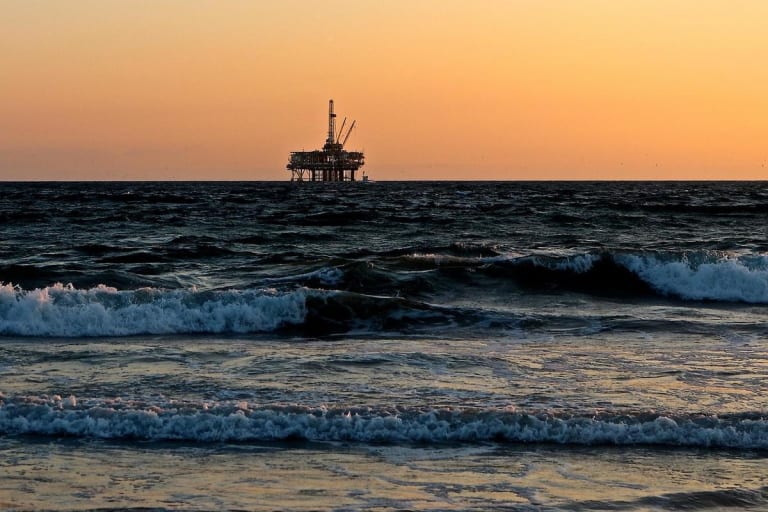
Oil and gas production in the Amazon region, particularly in the Foz do Amazonas Basin, has been a point of heated debate. Environmental organizations and riverside communities have expressed significant concerns regarding potential ecological impacts. Recently, the Federal Public Prosecutor’s Office (MPF) filed an appeal requesting the suspension of the drilling license granted to Petrobras, highlighting the tension between development and conservation.
Uniting Economic Development and Sustainability
The government’s vision for Brazil‘s energy future is clear: to continue exploring the potential of its hydrocarbon resources to finance neo-industrialization and boost the energy transition. The proposal is to integrate energy security, greenhouse gas emission reductions, and industrialization, simultaneously promoting the expansion of renewable energies and low-carbon fuels.
Petrobras, a central piece of this strategy, will continue to invest in exploration, refining, and production. President Lula highlighted that the country is demonstrating that it is possible to reconcile robust economic growth with an effective policy for reducing emissions.
“Brazil has been demonstrating that it is possible to combine economic growth with a reduction in emissions.”
The president also argued that Brazil possesses the “moral authority” to reject what he called “protectionist measures disguised as concern for the environmental cause,” committing to move forward with the roadmap for the decarbonization of the economy.
Criticism of Global Conflicts and Vision for the Future
On the international stage, Lula did not limit himself to energy issues. He criticized climate denialism and the marginalization of this discussion in global forums such as the G7 and G20, in the face of increasingly frequent extreme weather events. A highlight of the speech was the criticism of the conflict involving the United States and Iran, which directly impacts navigation in the Strait of Hormuz, through which about 20% of the world’s oil flows.
The conflict has global repercussions, driving up the prices of fuel and fertilizers, and forcing Brazil to allocate significant resources to subsidies to mitigate the impact on domestic prices. “The Strait of Hormuz has turned into a trench of war, when it should remain a vital passage for international trade. Families all over the world are paying for the increase in the prices of fuel, fertilizers, and food,” the President declared.
Increased International Interest in Exploration in Brazil
Parallel to the political maneuvering, the Brazilian energy sector is attracting international attention. Major oil companies have already signaled plans to expand their exploratory operations in the country, targeting new frontiers such as the Equatorial Margin and the Pelotas Basin.
Executives from multinationals present at the ROG.e event in Rio de Janeiro confirmed new investments in Brazilian assets. The American company Chevron, for example, announced the hiring of seismic surveys in the Foz do Amazonas Basin, an area near a recent discovery by Petrobras. The Portuguese company Galp has also expressed interest in expanding its exploration portfolio in new basins.