
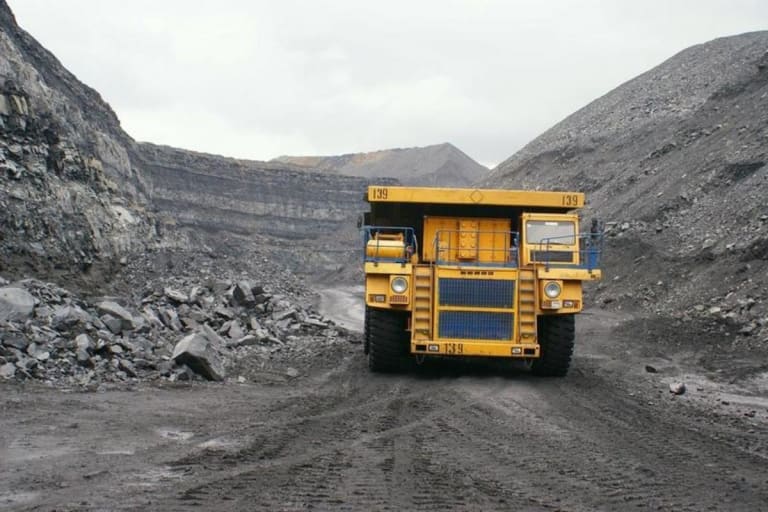
A new international collection investigates the impacts of extractivism on the energy transition and digitalization, analyzing the role of lithium, artificial intelligence, and data centers in global inequality.
The global acceleration toward clean energy sources and widespread digitalization has required an unprecedented amount of minerals, water, and rare earth elements.
However, behind the promise of sustainability, an urgent question arises: who is actually bearing the costs of this ecological and technological transformation?
To deepen this debate, the new international collection Empire of Extraction: Capital, Crisis, and Struggles for Climate Justice brings together case studies from Latin America, Europe, Africa, Asia, and the United States.
The work investigates the new frontiers of extractivism driven by modern technologies.
Published by the Rosa Luxemburg Foundation – Brazil and Paraguay, in partnership with Editora Funilaria, the research is divided into four volumes.
The material covers everything from the mining of critical inputs to the installation of data centers, exposing the tensions between technological development and climate justice.
The hidden costs of the energy transition
The advancement of artificial intelligence and global communication networks relies on a massive physical infrastructure that consumes natural resources at an accelerated pace.
The studies show that the current technological race reproduces old logics of exploitation under new forms of capital accumulation.
At the center of this discussion are minerals essential for electrification, such as lithium.
The intensive exploration of this resource in regions like the Jequitinhonha Valley in Brazil, and in areas of Argentina, exemplifies how territories in the Global South suffer direct impacts to supply foreign markets.
The materiality of the cloud and the pressure on resources
Digital infrastructure and data centers
The illusion that digital technology is invisible and sustainable falls apart when one analyzes the material foundation of the so-called cloud.
Data center operations and cryptocurrency mining demand colossal volumes of electricity and water, straining local power grids and generating new socio-environmental conflicts.
Elisangela Soldateli Paim stated:
Environmental justice requires looking at the transition beyond decarbonization. We must discuss who controls its means, who appropriates the gains, and who pays the social and ecological costs of this process.
This assessment comes from Elisangela Soldateli Paim, coordinator of the Latin American Climate and Energy Program at the Rosa Luxemburg Foundation.
For the expert, the focus should not be restricted to reducing emissions, but should encompass the entire resource control chain.
The future of sustainability and the power of communities
More than just pointing out the damage caused by the current model, the publication places local resistance at the center of the analysis.
The conflicts surrounding mines, data centers, and financing mechanisms reveal that affected communities produce fundamental knowledge about the direction of the green economy.
As the world moves forward in the search for alternatives to fossil fuels, it becomes imperative to rethink the power structures that shape the low-carbon economy.
Ensuring a true energy transition requires that social justice and territorial sovereignty remain at the heart of upcoming global decisions.