
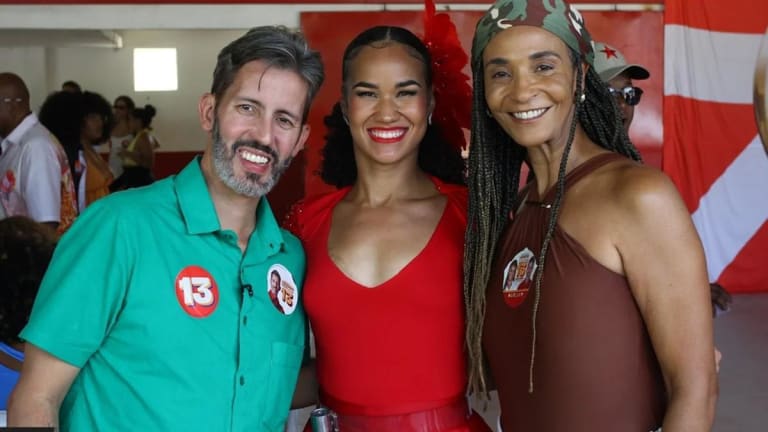
Candidate for Governor of the Federal District Leandro Grass (PT) is banking on the combination of the creative economy and housing policies to drive social development across the administrative regions of the DF.
During a marathon of political engagements on Sunday (11), the candidate for the local executive branch presented a platform that places culture and public housing as fundamental pillars of his government agenda.
Visiting Asa Norte and Gama, the candidate argued that strengthening the cultural identity of the Federal District must go hand in hand with job creation.
Among his main promises, the focus falls on the decentralization of public facilities and the resumption of landmark projects.
The strategy outlined by Grass seeks not only to value the artistic sector, but also to use cultural promotion as a perennial economic engine that generates income well beyond seasonal event periods.
Culture as a driver of development
The government plan outlines the creation of at least one public cultural space in each administrative region, ensuring that access to the arts reaches the peripheries more intensely.
The candidate also committed to restructuring the Culture Support Fund (FAC) and definitively completing the renovations at the Cláudio Santoro National Theater.
“Culture should not be seen merely as leisure, but as an essential gear for the local economy and civic education, ensuring that art sustains jobs and dignity for families in Brasília year-round.”
In Gama, the cultural agenda took practical shape with the announcement of the reopening of the historic Cine Itapoã.
Additionally, the project includes integrating culture into the public education network, reinforcing sports and leisure through renovations to facilities such as the local Olympic and Paralympic Center.
Housing and the role of cooperatives
Another central point of the project is tackling the housing deficit.
Leandro Grass proposes a governance model that strengthens dialogue with housing cooperatives, aiming to accelerate the delivery of units for low-income families and consequently reduce the Codhab waiting list.
The proposal to integrate housing development into the cultural and sports planning of the cities suggests a new urban approach for the DF.
The impact of these measures, if implemented, will depend on the future government’s ability to coordinate with social movements and the artistic community—elements that Grass points to as fundamental for carrying out his agenda through the next political cycle.
RELATED NEWS
 Leandro Grass Pledges Hospital Support in Recanto das Emas, Offers Aid to DF Waste Pickers
READ MORE
Leandro Grass Pledges Hospital Support in Recanto das Emas, Offers Aid to DF Waste Pickers
READ MORE
 Celina Leão Seeks Political Support and Inspects Fire-Affected Area in the Federal District
READ MORE
Celina Leão Seeks Political Support and Inspects Fire-Affected Area in the Federal District
READ MORE
 Sachsida states that Petrobras privatization is off the table in Flávio Bolsonaro’s plans
READ MORE
Sachsida states that Petrobras privatization is off the table in Flávio Bolsonaro’s plans
READ MORE